The building of an eco house in the
Norfolk Broads National Park
It is a well-known fact that moving house can be a stressful experience. We are often consulted by clients wanting to make adjustments to the house they have decided to move to, to update, adjust and conform it to their own living requirements. But what then of the experience of buying a site with a view to building your dream home from scratch? Here we share just one such project: a modern house built on the banks of the River Yare in Norfolk, just south of Norwich.
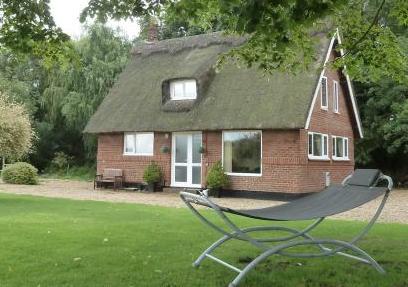
The site included a small thatched cottage which, besides having tiny rooms, was difficult to heat and was damp, sited as it was on very wet ground. It also did not make the most of the site and the superb views it offered. Our client saw the huge potential the site had to offer and came to us to design an environmentally sustainable family home. To conform with modern flood risk regulations, the new house was built on stilts in order to raise the ground floor above the 1:1000 year flood risk level. Further details about the brief and the building’s special features can be read on our website here.

In this newsletter we wanted the project photographs to tell the story, along with our clients’ personal highlights of the building project and thoughts of their brand new home:
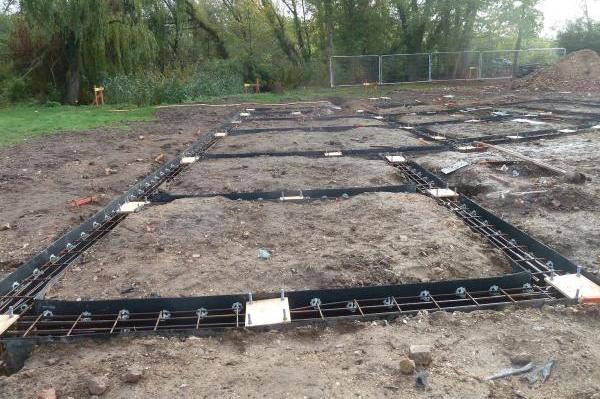
Preparing the formwork over the piles for the ground beam and the poured ground beam in place
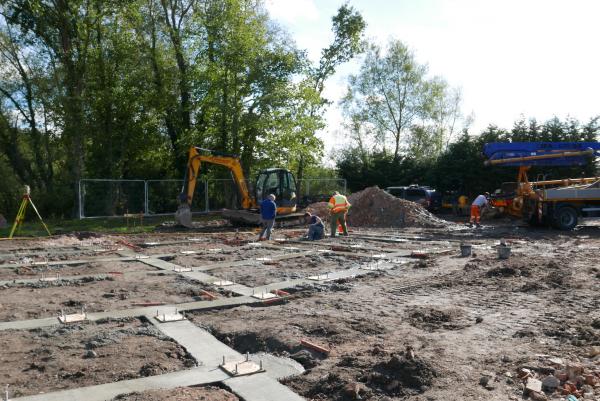
Client: "Despite having a footprint over twice that of the original building, the location on the site of the new building, its design and orientation, mean that the site definitely feels better utilised. There is more parking, a better garden area and a much-improved relationship with the long riverside part of the site bounded by the river."
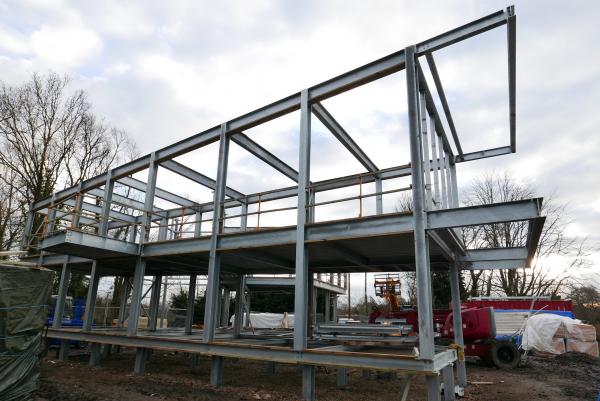
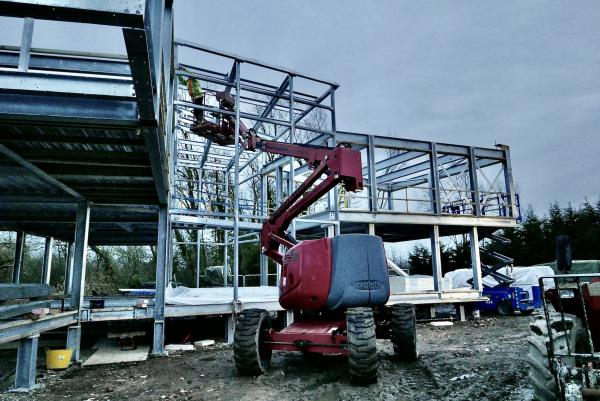
Steel beams form the skeleton of the structure giving it strength and rigidity
Client: "The installation of the final steel beam across the atrium was a hugely memorable moment. This was the last part of a complicated steel frame structure. It was constructed on a system of ground beams, with multiple angles in both the horizontal and vertical axis. It was hugely satisfying to watch it being dropped into place with all the bolt holes aligning perfectly and no shimming or trimming to the steel was required."
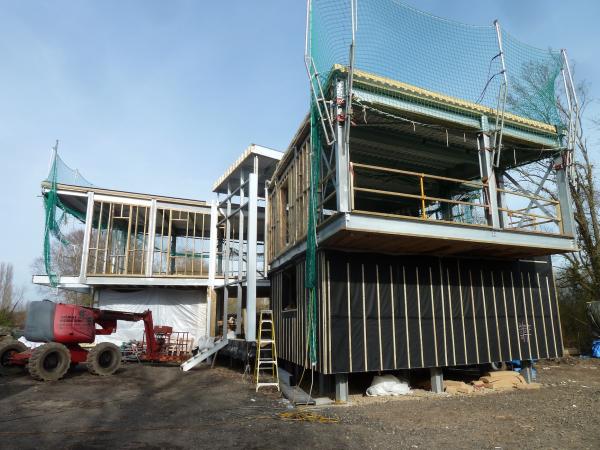
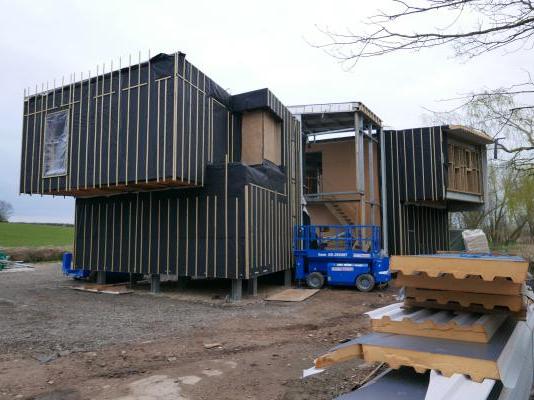
Creating timber structural walls on the steel frame
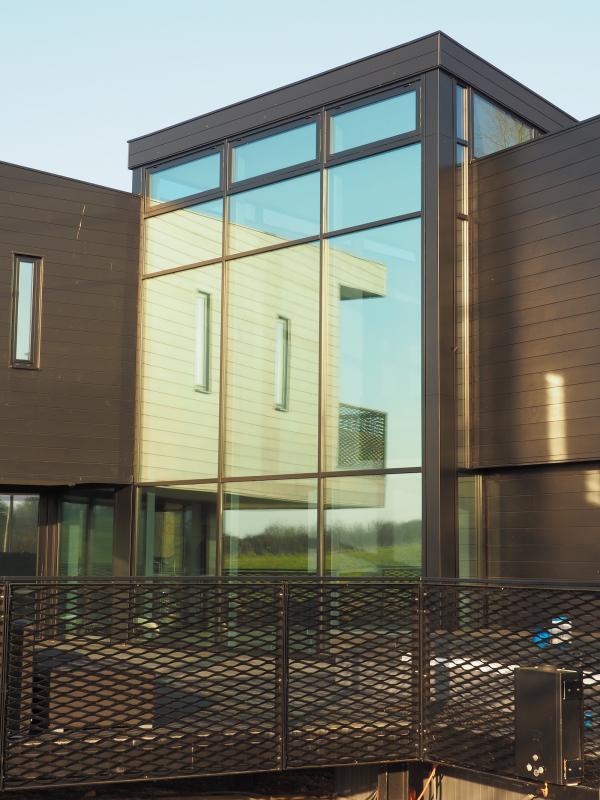
Client: "Another amazing experience was when the huge sheets of double-glazed Ornilux glass were being installed to the front of the atrium. The central pane itself weighs some 400kg. It is satisfying to report that it has been very effective in preventing any bird strikes: an important consideration, given the nature of the waterside site and its location within such an important bird habitat."
The large sheets of Ornilux glass contain markings visible to birds but hidden to the human eye
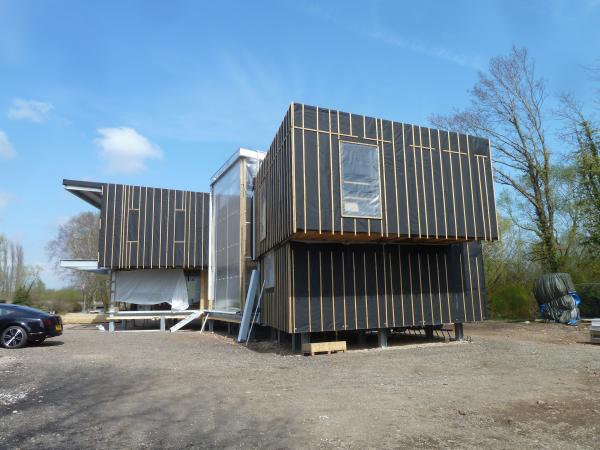
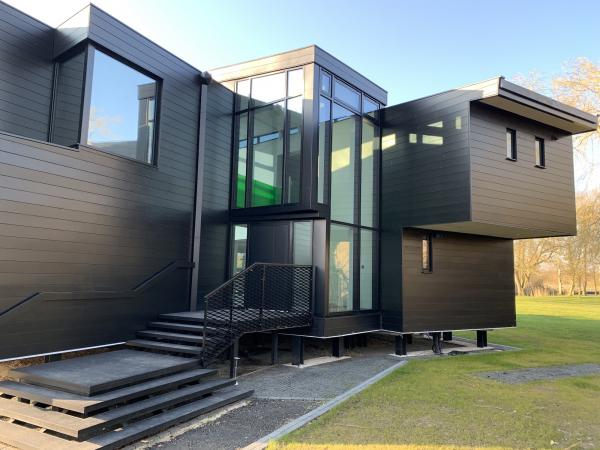
Eastern elevation during construction and nearing completion
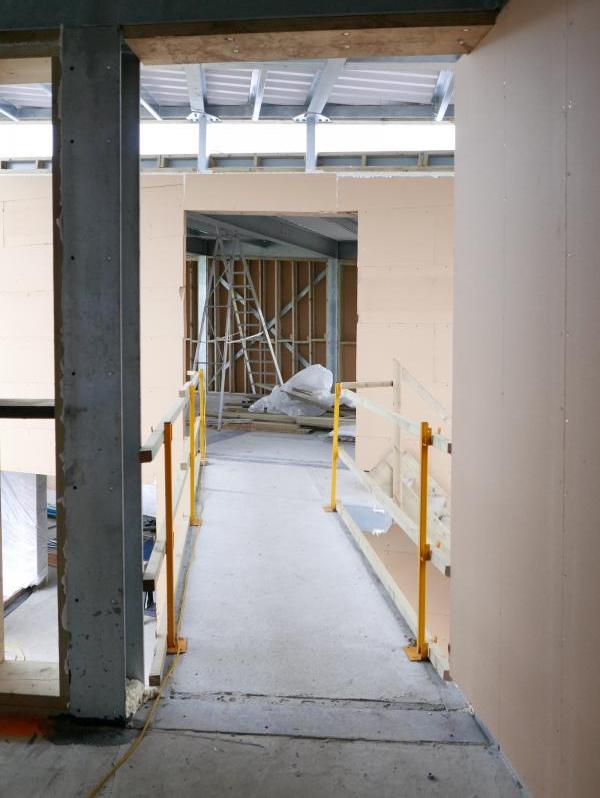
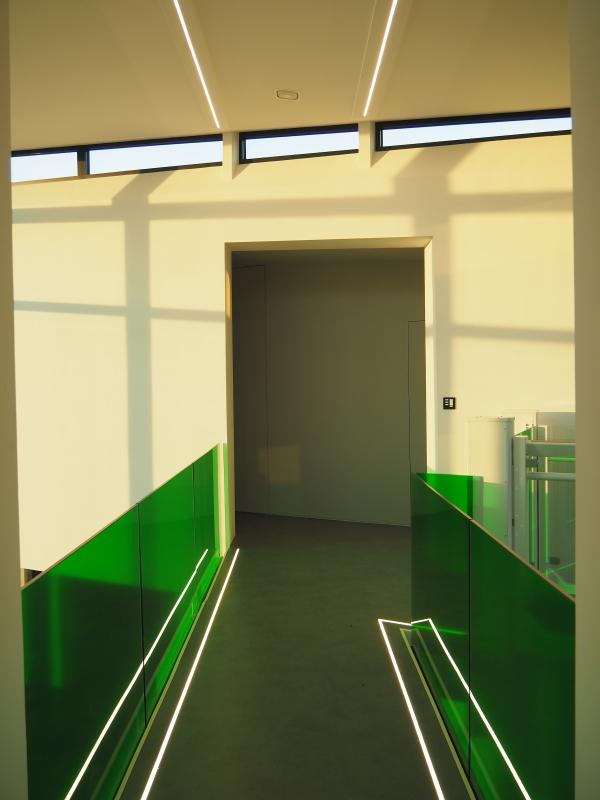
The bridge between the two wings of the house during construction and completed
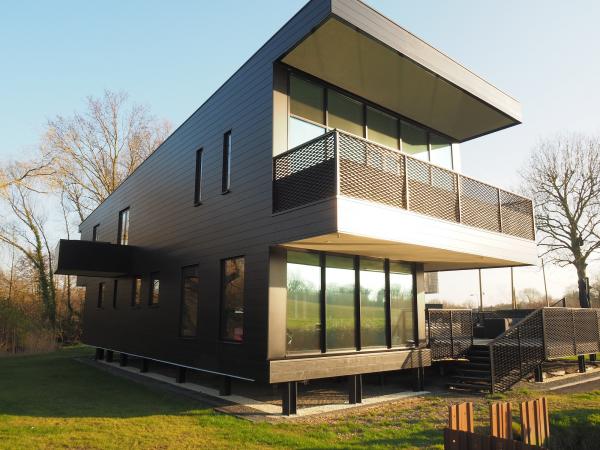
A first floor balcony affords long reaching views across the landscape and down the river
Client: "We love that the house is surrounded by nature and thanks to the views out through the huge panes of glass, the feeling of being part of the surroundings is felt within the house as much as it is outside."
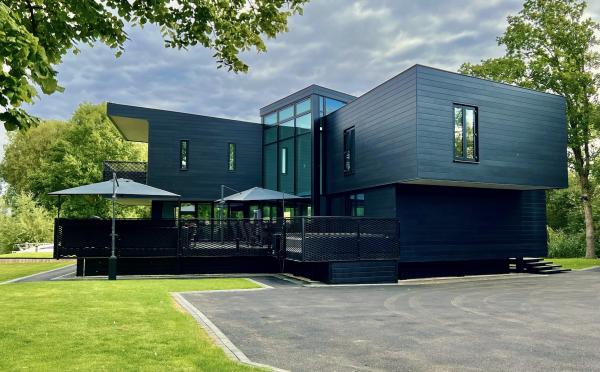
The completed house: a view from the South
Architectural Adages
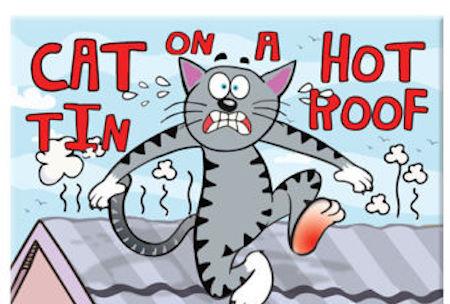
Like a cat on a hot tin roof
The phrase, meaning to be very anxious or agitated, is the American-English variant of the original: ‘like a cat on hot bricks’. An earlier form of the phrase, recorded by the naturalist and theologian John Ray (1627–1705) in A Collection of English Proverbs (1678), was ‘To go like a cat upon a hot bake stone’. A bake stone, also written ‘backstone’ was the flat stone used to bake bread or cakes in the oven, much like the pizza stone in use today.

In an 1820 article titled A new system of shoeing horses found in The Sporting Magazine or Monthly Calendar, of the Transactions of the Turf, the Chase and every other Diversion Interesting to the Man of Pleasure, Enterprise & Spirit (London), the author wrote:

“The horse could not endure the concussion upon the roads, became sore in his heels and frogs, and went, as Bracken has it, ‘like a cat upon a backstone’.”

The Cambridge Chronicle and Journal of 26th March 1842 recorded that at the Cambridgeshire Lent Assizes, John Poulton, a veterinary surgeon, declared:

“The horse which is the subject of this action […] was so lame that he went dotting along on three legs, like a cat on hot bricks” (and records further that there was loud laughter in the courtroom).

The American version, ‘a cat on a hot tin roof’ dates from the 1950’s, around the same time as Tennessee Williams’ play of the same title. It is not known whether Williams’ coined the term himself but he did popularise it to the extent that this version has replaced the original English version for the most part.

Next Month:


The architect-designed building: art, craft or just functional form?
If you have enjoyed reading this newsletter and know someone else who might like to read it too, please use these links to share.  They will need to contact us at media@lbrarchitecture.co.uk to be added to the mailing list.  General enquiries should be directed to design@lbrarchitecture.co.uk
This email was sent to $show_email because you opted in or signed up to receiving our newsletter or have had business contact with us in the past.  If you would prefer not to receive further Architectural Digest bulletins please unsubscribe using either the tab below or above.  LBR Architecture are committed to protecting your privacy and data. We will use the information that we collect about you in accordance with the General Data Protection Regulation 2018 and the Privacy and Electronic Communications Regulations 2003. You can read our Privacy Policy here.