- Invitation to the Families First Partnership Communication and Engagement Event
- Spotlight On...Engaging with Men
- NEW - Modern Slavery & Child Trafficking Masterclass - The Recordings Are Ready
- WSCP Website Updates
- Welcome to the WSCP Training Brochure - What's on Offer this August?
- NEW - SafeTALK Session
- Water Safety: Does the Colour of Your Child's Swimwear Matter?
- The Lullaby Trust - Baby Safety Advice
- Education Updates
- Lumi Nova: Digital Support for Childhood Anxiety
- Is Your Child Worried About the Social Media Ban Announcement
- The Child Safeguarding Practice Review Panel Update
- Keeping Children Safe Online Over the Summer - Guidance for Parents/Carers
- OPSS Product Safety Recall: Baby Floats
- Centre of Expertise on Child Sexual Abuse Resources
- Top Safety Tips for Families this July
- NSPCC Updates
- Family Rights Group
- What Would You Like to Hear About?
- Useful Links
|
1. Invitation to the Families First Partnership Communication and Engagement Event
|
As part of the ongoing Families First Partnership (FFP) programme, The FFP Team are pleased to invite you to attend their upcoming FFP Communication and Engagement Event.
📅 Date: Thursday 20 August
🕘 Time: 9:00am – 12:30pm
📍 Venue: Wakefield Trinity RLFC
The event will be hosted by leaders from Children’s Social Care, West Yorkshire Police and the Wakefield Integrated Care Board. We will share the proposed changes being developed through the Families First Partnership programme and to engage with our partners and stakeholders on what these changes may mean for children, families, services, and organisations across the district.
Attendees will also take part in three workshops, providing an opportunity to explore the developments in more detail, ask questions and share feedback to help shape the future direction of the programme. These are likely to be on:
- Multi-Agency Child Protection Teams
- Family Help
- Family Networks
By attending, you will have the opportunity to:
- Learn more about the Families First Partnership programme and the proposed developments
- Understand how the changes may impact your service and the families you support
- Share your insights, ideas, and feedback
- Network with colleagues and partners from across the partnership
- Contribute to shaping the future delivery of family support services within Wakefield
We would be delighted if you could join us and be part of this important conversation.
To reserve your place, please complete your details using the booking link below:
Click here for further information about the Families First Partnership activity.
|
2. SPOTLIGHT ON...Engaging with Men
|
New Resource: Engaging Men to Safeguard Children Toolkit
See more. Safeguard better!
Professionals working with children and families are encouraged to access the toolkit which is a comprehensive resource designed to strengthen confidence, skills, and practice when engaging fathers, stepfathers, male carers, and other significant men in children's lives.
Research and practice learning consistently show that meaningful engagement with men can improve outcomes for children. However, practitioners often report challenges in identifying, involving, and working effectively with male family members. This toolkit has been developed to support professionals in overcoming these barriers and embedding good practice across all services.
How can you use the toolkit?
The toolkit is ideal for:
✅ Continuing Professional Development (CPD) and self-directed learning
✅ Team meetings and briefings
✅ Reflective discussions and supervision
✅ Multi-agency learning sessions
✅ New starter inductions
✅ Service development and practice improvement activities
The resource brings together practical guidance, learning materials, reflective questions, research, and tools to help practitioners recognise the importance of engaging men and develop effective approaches in their day-to-day work.
Further Learning
Alongside the toolkit, practitioners can also access the Engaging Men One Minute Guide, as well as other guides to provide concise learning on key safeguarding topics that can be used for individual study or team learning discussions.
🔗 One Minute Guide
🔗 Engaging Men to Safeguard Children Toolkit
🔗 Engaging Men Campaign materials
Take a few minutes to explore the toolkit and consider how it could support your professional development, enhance team learning, and strengthen your practice when working with fathers and male carers to improve outcomes for children and young people. |
3. NEW - Modern Slavery & Child Trafficking Masterclass - The Recordings Are Ready!
|
Good things come to those who wait!
Following the technical difficulties that interrupted our Safeguarding Week: Modern Slavery & Child Trafficking – Windows of Vulnerability webinar, we've been working behind the scenes with our speakers to re-record the presentations that were unexpectedly cut off.
We're delighted to let you know that all recordings are now available to view, meaning you can catch up on every presentation from the event at a time that suits you.
Once you've watched the recordings, please complete our evaluation form. Not only does your feedback help us improve future events, but you'll also receive access to the presentation slides.
Thank you for your understanding and support. We hope you enjoy this important learning opportunity and find the content valuable in your safeguarding practice. |
The WSCP Business Unit have been busy updating the content on some of our published webpages. Please see the links below for the sections that have been updated this month:
- Coming Soon: Updated Substance Use webpage
|
5. Welcome to the WSCP Training Brochure - What's on Offer this August?
|
Take a look at all the latest training which features:
- Child Exploitation Learning Exchanges
- Multi-Agency Neglect Training
- OCTOBER DATE ADDED: Working Together a Shared Responsibility
- Engaging with Men Training
- Supporting & Safeguarding LGBTQIA+ Young People
- Every Sleep a Safe Sleep Training
- Relationship Matters: Reducing Parental Conflict Toolkit Training
- Perinatal Mental Health – Impact of Parental Mental Illness on Children
- Ready to Relate / Infant Parents Relationship Cards Training Sessions
- Risk and Resilience Framework Training
- Partner/External Training
- YHMAST Bridging the Gap: Transitional Safeguarding Conference
- Access to recorded training sessions, podcasts, videos, one-minute guides and more.
|
6. NEW - SafeTALK Session
|
Colleagues are invited to attend SafeTALK Suicide Alertness for Everyone, a practical training session designed to help participants recognise when someone may be struggling with thoughts of suicide and learn how to start a supportive conversation that could help save a life. The next session will take place on Wednesday 26 August at 9:30am. The date has been deliberately scheduled during the school holidays to make it easier for teachers and support staff to attend. Places can be booked via Eventbrite using the link below: 🔗 https://www.eventbrite.co.uk/e/think-about-suicide-safetalk-training-start-the-conversation-save-a-life-tickets-1992930015324?aff=oddtdtcreatorWe encourage anyone with an interest in improving their suicide awareness and intervention skills to register. |
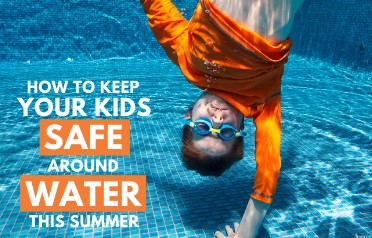
7. Water Safety: Does the Colour of Your Child's Swimwear Matter?
|
As families head off on summer holidays and enjoy days out by the water, most parents choose swimwear based on style, favourite colours or popular characters. However, there's another important factor worth considering: visibility.
Adult supervision remains the most important way to keep children and young people safe in, on and around water. But in an emergency, being able to spot a child quickly can make a critical difference. The colour of a child's swimwear can affect how easily they can be seen both on the surface and underwater.
Swim England is encouraging parents and carers to think carefully about swimwear colours when preparing for holidays and swimming activities. Research has shown that some colours can be difficult to see in water, while bright neon colours such as orange, green, pink and yellow are much more visible in most swimming pool environments.
Visibility can also be a challenge in open water settings such as beaches, lakes and rivers. While brightly coloured swimwear can help children stand out, it's important to remember that outdoor water environments can present additional risks, including currents, tides and poor visibility.
When choosing swimwear this summer, consider opting for bright, neon and contrasting colours to help make children easier to spot in and around the water.
Enjoy the summer and stay safe around water. |
8. The Lullaby Trust - Baby Safety Advice
|
Hot Weather Safety
As the hot weather spell continues if you care for a baby, remember to keep them out of direct sunlight as much as possible to keep them safe. Remember to check them regularly to see if they're getting too hot by feeling their chest or the back of their neck. If their skin feels sweaty or clammy then it means they are too hot, so remove a layer of what they are wearing.
Top tip 📢: Don’t cover prams, buggies and travel systems with blankets, cloths or any cover that stops the air flowing. They risk the baby getting too hot, and mean you can’t see if they’re having difficulties or monitor their temperature as easily.
Instead, use a clip-on sunshade or parasol. This will keep little ones shaded while allowing air to circulate, and give you a clear view of the baby. Click here to learn more. Alcohol and Baby Safety
The Lullaby Trust advise that there is always a sober adult to care for a baby. If you care for a baby, there may be times when you and/or your partner are drinking alcohol so it’s a good idea to plan ahead for these moments and make sure there’s always a trusted sober adult around who can care for them.
Having a sober adult helps keep babies safe, especially if something unexpected happens. Click here to learn more. |
School Attendance
The Department for Education (DfE) has designed a guide to help schools in England communicate with parents and carers about school attendance. Aiming to support improved attendance, the guidance includes: insights into successful attendance communications; practical suggestions about how, what and when to communicate; and ready to use letter templates and phone call scripts.
Access the guidance: Communicating with parents about school attendance |
Keeping Children Safe in Education
The Department for Education (DfE) has published the 2026 edition of Keeping children safe in education (KCSIE). The guidance will come into force and replace KCSIE 2025 on 1 September 2026. The statutory guidance sets out what schools and colleges in England must do to safeguard and promote the welfare of children. Key changes in KCSIE 2026 include new and updated guidance around: regulations and safeguarding requirements on school premises; children requiring mental health support; young carers; children who are questioning their gender; and safer recruitment and regulated activity.
Read the guidance: Keeping children safe in education
Read our summary on NSPCC Learning: Keeping children safe in education (KCSIE) 2026: summary of changes |
"You're So Real": Launch of Film and School Resource Pack
The Anti-Bullying Alliance and Haringey Shed have partnered to create a school resource pack to support KS2 and KS3 teachers using the film ‘You’re So Real’. Developed alongside young people, ‘You’re So Real’ is a filmed live performance that aims to engage and educate children and young people, giving them space to explore and reflect on what challenges may come their way in the future. The performance addresses themes of anti-bullying, mental health, mobile phones and social media, and emphasises the importance of being kind to others and yourself. It aims to help support children affected identify someone they trust to talk about their situation. You can watch the full film here and click here to download the resource pack. |
Reminder: Anti-Bullying Week 2026: Break the Silence
A reminder that Anti-Bullying Week 2026 will take place from Monday 16th to Friday 20th November with the theme: Break the Silence. Pledge to Break the Silence about bullying and create kinder, more supportive environment where all children and young people belong. Click here to find out more about about Anti-Bullying Week 2026.
|
Helping Schools Take Action on Racist Bullying: New ABA Guidance Launched
The Anti-Bullying Alliance (ABA) is proud to launch its new guidance, Preventing and Responding to Racist Bullying: Practical guidance for schools and settings supporting children and young people.
Every child and young person has the right to feel safe, valued and included in their school or setting. Yet for too many children, racism continues to be a reality that impacts their wellbeing, sense of belonging and ability to thrive.
The ABA regularly hear from children and young people who have experienced racist language, stereotypes, exclusion and discrimination. We also hear from school staff who want to do more but who often tell us they would welcome greater support and clearer guidance on how to prevent and respond to racist bullying effectively.
That is why the ABA have developed this new guidance, click here to read more.
|
Reminder: DSL Opinion Form
WSCP are interested in general themes, repeated issues or areas of good safeguarding practice which DSL's experience within Wakefield. This may then be raised at multi agency strategic level meetings. NB this is not the forum for individual case specifics - please raise these individual case details with the appropriate managers in accordance with the professional disagreement procedure. 2.7 Resolving Multi Agency Professional Disagreements and Escalation (proceduresonline.com) These opinion forms are your voice as education settings at the WSCP so if you have anything to share please do complete and submit these forms which are sent out 6 times a year.
|
Reminder: DSL Forums & Network Meetings Open to All!
|
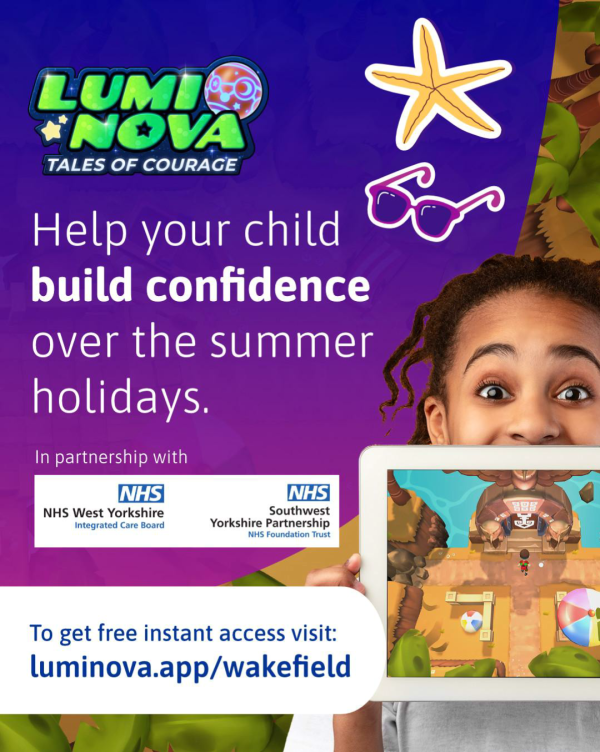
10. Lumi Nova: Digital Support for Childhood Anxiety
|
The summer holidays are here! 🌞 Summer is a great time to recharge, but the break from routine can sometimes bring about fears and worries for some children and young people. The feeling of change, going back to school or being away from friends and missing out, can bring a wave of different worries and difficulties. It's not too late to support families to build their child's resilience and confidence over the summer break. Easily share Lumi Nova with families using our summer resources below. Lumi Nova Summer Resources
Families in Wakefield can register for a FREE game key by heading to the Lumi Nova website - luminova.app/wakefield. |
11. Is Your Child Worried About the Social Media Ban Announcement
|
For many young people, social media spaces are not simply apps on a phone. They are places where relationships are built and maintained. It is therefore understandable that some children may be worried about what the announcement could mean for them. The Anti-Bullying Alliance have published some some ways parents/carers can support children if they are concerned about the announcements about social media bans. Click here to learn more.
Growing Up in a Digital World: A Guide for Parents and Carers
In today’s fast-moving digital world, parents and carers face growing complexity in supporting their children. The rapid evolution of smartphones, social media and artificial intelligence has created both opportunity and anxiety, often leaving families uncertain about how to balance safety, connection and independence.
Growing Up Digitally: A Guide for Parents and Carers, responds directly to this challenge. It provides calm, practical and evidence-informed guidance, enabling parents to make confident decisions across all stages of childhood - from early years through to adolescence. Click here to access it.
|
12. The Child Safeguarding Practice Review Panel Update
|
Safeguarding children not in school: New resources and webinarThe Child Safeguarding Practice Review Panel (Panel) have published new resources to help practitioners safeguard children who are not in school on their online learning hub. Vulnerable children who have low school attendance, are home educated, or missing education can be harder for practitioners to see and, as a result, may be at greater risk of abuse and neglect. These resources aim to ensure that when children are less visible to practitioners, their safety remains a priority. Click here to access the resources.
|
13. Keeping Children Safe Online Over the Summer - Guidance for Parents/Carers
|
With the summer holidays now here, children are looking forward to having more free time. For many, this will be spent online. Parents/carers do worry about what their children are doing online, yet very few know of the real dangers and what to do.
Calling all professionals: Please share with your parents and carers the below information document on keeping children safe online over the summer holidays. It is a great timely reminder of the key messages and how to set parental controls. There is also an information guide on how to report if parents have any concerns:
|
14. OPSS Product Safety Recall: Baby Floats
|
The Office for Product Safety and Standards (OPSS) has issued a recall for baby floats with canopies. OPSS say the products present a risk of drowning because the canopies and overhead structures may increase wind resistance and affect the stability of the float. Read the recall in full here. |
15. Centre of Expertise on Child Sexual Abuse Resources
|
NEW: Updated Child Sexual Abuse Response Pathway
The Centre of Expertise on Child Sexual Abuse (CSA Centre) have relaunched their Child Sexual Abuse Response Pathway in a new interactive format, making it quicker and easier for professionals to understand the steps they can take to protect and support children and families.
The Response Pathway is a free online resource designed to empower and support multi-agency professionals to take steps to protect and support children and their families by responding calmly and confidently when there are concerns of sexual abuse.
Building on current legislation and guidance, it helps professionals understand the role they can play; not just by telling them what to do, but by helping them understand how to do it.
Visit the Response Pathway
Sign Up to the CSE Centre's Free Introductory Webinars
Their upcoming dates include:
Visit the CSA events page to view all their upcoming events.
Centre of Expertise on Child Sexual Abuse: Information sharing guide
The CSA Centre has published an online guide to help professionals find, share and use information across agencies to better respond to child sexual abuse.
It addresses common misunderstandings about information sharing and supports earlier identification, protection and recovery. The guide includes learning on information sharing in school settings. |
16. Top Safety Tips for Families this July
|
The Child Accident Prevention Trust (CAPT) have published the following safety tips for families this July. Calling all professionals - where possible please share this important information with any parents/carers that you work with. Squish toys warning: What you need to know about the latest toy trendDoes your child love squishy toys? They come in all different shapes and colours, making them the latest collectable craze. But there are increasing concerns that some could be dangerous. Here’s what you need to know about the latest toy trend. Click here to learn more. 10 dangerous products to avoid this summerWe tend to think ‘If I can buy it for my child, it must be safe’. But sadly, that isn’t always true. To help you spot which products to avoid this summer, CAPT have highlighted some of the biggest risks to your child’s safety. Tell me more. Staying safe this summer
Whilst summertime brings lots of opportunities for fun in the sun, there can be extra risks too. That’s why CAPT have pulled together some of our top tips for keeping children safe:
Water safety: Top tips to swim safe this summer
Staying safe on holiday: 5 things you need to know
Summer safety display pack
|
The NSPCC have recently released the following updates which may be of interest to professionals working with children and families, and to share with parents/carers where applicable.
Case Reviews
Eight new case reviews have been added to the collection this month featuring issues including child sexual abuse, serious youth violence, suicide, and no recourse to public funds. Please click here to read the reviews.
AI-Generated Child Sexual Abuse Material
The Internet Watch Foundation (IWF) has launched a campaign and new guidance for parents and carers about AI-generated child sexual abuse material, discussing how AI can be misused to manipulate children’s online images and how to protect children’s photos from AI abuse. The guidance aims to support parents and carers to make informed decisions about their children’s images and includes advice on speaking to children and young people about AI and deepfake nudes, and image consent.
Read the news story: New guidance for parents and carers as AI-manipulated images of children become a growing concern
Read the guidance: Stopping AI child sexual abuse imagery: advice for parents and carers.
Childline Activity Packs
NSPCC Learning has published summer activity packs for running sessions with children and young people to celebrate Childline’s 40th year of service and help children learn more about how to get support if they need it. There are packs for 5- to 11-year-olds and 12- to 16-year-olds containing presentation slides, session guidance and printable activities. The packs are suitable for all settings, including schools, summer groups and clubs outside of school.
Download the packs: Celebrating 40 years of Childline
Voice of the Infant
The Institute of Health Visiting (iHV) has published a report evaluating the impact of training health visitors in the use of the Alarm Distress Baby Scale (ADBB), a tool to help with routine checks to promote infant wellbeing. The tool focuses on a baby’s social behaviours such as eye contact, facial expression, vocalisation, and activity levels to help practitioners better understand the ways babies express their feelings and to help parents and carers with bonding and attachment. It can also be used to recognise early signs of psychological distress, enabling specialist support to be accessed as soon as it is needed. Findings from a mix of surveys, audit data, focus groups and parent interviews include: ADBB training strengthens understanding of infant social withdrawal and increases practitioner confidence in observing and interpreting babies’ behaviour; health visitors reported feeling better equipped to articulate the baby’s perspective; and parents described the 6–8 week review as reassuring, supportive and confidence building.
Read the report: The Royal Foundation expands support for health visitors to "give babies a voice"
See also on NSPCC Learning: The voice of the infant: expert insight videos
Early Year Statutory Framework
NSPCC Learning has updated its CASPAR briefing summarising the Department for Education’s Early Years Foundation Stage (EYFS) statutory framework, setting out requirements for learning and development, assessment and safeguarding and welfare in early years settings in England. The 2026 edition includes new and updated information on the following areas: sleeping arrangements; concerns about children’s safety and welfare; suitable people; and children’s screen use. The 2026 edition of the framework is effective from 01 September 2026.
Read the briefing: Early Years Foundation Stage (EYFS) Statutory Framework 2026: Summary of Requirements
Adolescent Suicide
The Child Safeguarding Practice Review Panel has published a briefing paper on adolescent suicide in England. The paper collates learning from serious child safeguarding incidents relating to adolescents who died by suicide. The paper sets out key facts and figures and highlights common issues from the reviews such as: escalating risk over time; ongoing and repeated service involvement; and mental health needs and ongoing distress. This briefing has been published in the Panel’s new learning hub on adolescent suicide which features local reviews, statistics and learning resources including a slide pack for professionals.
Read the briefing: Adolescent suicide: the child behind the story: understanding cumulative harm through lived experience
Visit the Learning Hub: Adolescent Suicide
Other useful guides/resources published by the NSPCC Learning
|
The charity Family Rights Group work to create a society in which children can thrive in their families and have loving relationships throughout their lives. They support families involved with children’s services or who need their help. Digital flyers and printed leaflets
Below is a link to a digital copy of their advice service flyer. They also have A4 or A5 size printed copies that they can send to you if you want to display them and give them out to families who might want to access their advice. Please contact them if you would like printed copies.
Other help from Family Rights Group:
- Birth families support map – birth families affected by adoption can search by local authority area for services that provide support and information to birth families.
|
19. What Would You Like to Hear About?
|
What areas regarding child safeguarding do you want to hear about? WSCP welcome your suggestions for content for the partnership e-bulletin. Therefore, if there are any items you would like to be featured in the next edition or to provide feedback which will help us improve the newsletter going forward please email wscp@wakefield.gov.ukThe e-bulletin is circulated on or around the last working day of each month, therefore any suggestions for content would need to be received at the latest the week prior to circulation. |
|
|
Copyright © 2026 Wakefield Safeguarding Children Partnership, All rights reserved.
Has this email been forwarded to you? Why not sign up yourself here so you don't miss out on future
WSCP e-Bulletins?
Our mailing address is:
|
|
|
|
|