|
NW London System Update: December 2025
|
|
|
Foreword by Frances O’Callaghan, chief executive
Welcome to our December update.
This is a challenging period for the NHS, with a rapid rise in flu cases and the upcoming resident doctors’ strikes likely to put our services under extreme pressure. I want to thank partners across the system for your help in getting out our winter messages to residents and patients – while recognising we need to redouble our efforts. I have asked our communications teams to reach out to provider and local authority colleagues and work with you to support people taking up vaccinations and getting the best from health services – including using alternatives to A&E when they are not facing a medical emergency. Please see our key messages about flu below. For wider winter messaging, please see our website.
It is also a difficult time for many ICB staff, as North Central London and North West London ICBs have now begun consulting with staff on our proposed single structure. While we are committed to the model ICB blueprint set out by the government, the reality of a 50% reduction in ICB funding is that many people’s jobs and lives are impacted. I am grateful for the kindness and support that colleagues have shown to our staff.
On a more positive note, I was delighted that over 200 people attended our recent Health Equity Summit. Tackling health inequalities is a key objective of ICBs and it is great that so many partners are working with us to do this. It is also great to see some of the most outstanding efforts being recognised through our Health Equity Awards.
You will be aware of my decision to move on from the ICB role to take up a national position as Chief Executive of NHS Blood and Transplant. This is not a decision I have taken lightly and I will be sorry to leave ICB and ICS colleagues. I will remain at the ICB to oversee the staff consultation and will then take up my new role in February. Thank you once again for making me so welcome in north west London – and I am sorry that my stay has ended up being a brief one.
Wishing all of you and your families the very best for the festive season.
Best wishes,
Frances, Chief Executive Officer, NHS North West London
|
|
|
|
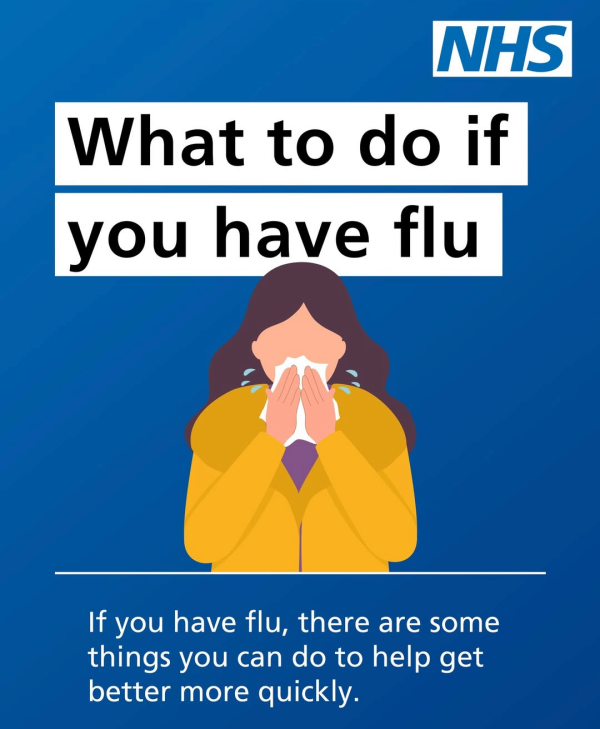
Please help us reduce pressure on health services in the weeks ahead, in the wake of rising cases of flu and the planned resident doctors’ strikes.
- Our key messages are set out below.
- If you have symptoms of flu: coughing, sneezing or fever - help stop the spread.
- Stay home if you can and wear a mask around other people.
- Look after yourself, rest, keep warm take paracetamol or ibuprofen to lower your temperature and treat aches and pains. Drink plenty of water and stay hydrated.
|
|
|
If you need medical help or advice use NHS 111 online or over the phone from home. Please do not travel to our hospitals or emergency services. Help stop the spread.More information➡️ www.nhs.uk/conditions/flu
- If you are eligible for a flu vaccination:
- over 65
- children aged 2-3 all school age children
- people with health conditions
- and those who are pregnant – make sure you get yours now.
|
|
|
|
Pharmacy opening hours over for 2025 Christmas and New Year bank holidays
|
|
|
Our Chief Executive, Frances O’Callaghan, has announced that she will be leaving North Central and North West London West ICBs to take up a new role as Chief Executive of NHS Blood and Transplant. She will begin her new role in February 2026. We will keep partners updated. Find out more on our website. |
|
|
Last week, more than 200 partners from health and care organisations and community groups joined forces at the North West London Health Equity Summit. The annual event, designed to celebrate excellence and accelerate progress, saw a renewed commitment from attendees to work together and take action on reducing health inequalities in neighbourhoods. A keynote speech from David Walker, Chair of 3ST, highlighted the role of voluntary and community partners in reducing health inequalities, while Professor Kevin Fenton, Regional Director in the Office for Health Improvement and Disparities, explored neighbourhood health through the health equity lens. Throughout the day, delegates attended solutions-focused workshops to discuss approaches to tackling inequalities – from managing long-term conditions, to improving early intervention, prevention, personalised care, and delivering neighbourhood-based screening. Conversations highlighted how the wider social determinants of health —such as housing, poverty, language barriers, digital exclusion and health literacy— can worsen health inequalities and that a whole-system approach is needed. The summit underlined a commitment to the value of trust and cultural competence in addressing health inequalities so that residents are heard, respected, and supported. Partnership working was identified as crucial for integrated, neighbourhood-level care - breaking down silos between primary care, acute hospital services, community providers, local authorities, voluntary organisations, and communities. At the heart of these discussions was a focus on the importance of using data-led insight and evidence in order truly meet the health and care needs of people and communities. The event also celebrated excellence through the Health Equity Awards, recognising outstanding contributions in six categories following a nomination and judging process. The winners are:
- Abdi Ali - Horn of Africa Disability and Elderly Association [HADEA]
- Prafula Shah - Oshwal Association of the UK
- Katerina Manginas and Maryam Shah - Asylum Seekers Ealing Wellbeing Kitchen Project
- Eartha Pond - ESP Foundation
- Westminster Community Health and Wellbeing Workers
- Community Connex Engagement Team.
Nicola Kay, NHS North West London’s Director of Partnerships, Population Health and Reducing Inequalities, said: “I express my thanks to our organisers, presenters and attendees who made this summit a success. The event showcased some of the very best initiatives throughout North West London, and brought together a wide range of partners from across the system to work collectively to embed a health equity approach in everything we do. The summit will help to ensure that our drive to reduce healthcare inequalities and improve outcomes is a core part of neighbourhood health.” |
|
|
|
The North West London In-Reach Model: Your Community, Your Voice, Your Health will bring NHS health services directly into trusted community spaces, with an initial focus on supporting African and Caribbean communities across the region. As part of the rollout, a launch event took place on Saturday 6 December 2026 at Brent Civic Centre, marking the opening of five new in-reach hubs across North West London.
The event featured health checks, wellbeing activities, food, and conversations with residents to help shape how the model develops locally. Community organisations are being engaged to contribute to the design and delivery of the model, including showcasing their work, strengthening collaboration with NHS teams, and sharing insights on culturally appropriate care.
We encourage partners to share the information widely as work continues to build strong community-led pathways that improve access, trust, and health equity.
Employment and income inequality remain important and rising contributors to poor health outcomes and vice versa. We have been working closely with the range of employment support offers in North West London to improve access to employment support, keeping people in work, and supporting people to get work.
We have engaged stakeholders to explore improving access to Social Welfare Legal Advice across north west London and continue to work closely with WLA to deliver the WorkWell programme, collaborating with primary care to improve referrals for eligible patients.
We re-launched the VCSE Community of Practice in October 2025, ensuring there is a forum and mechanism to engage and collaborate with North West London’s large voluntary, community, and social enterprise sector on key system priority areas.
|
|
|
As part of the ongoing change programme within Integrated Care Boards (ICBs), North Central London and North West London ICBs have now begun consulting with staff on:
- The transfer of staff from NC London and NW London ICBs to West and North London ICB on 1 April 2026
- The proposed future single structure (proposed directorate and team structures and roles), including accommodation arrangements
- Functions that may transfer out from the ICBs on 1 April 2026 or later in 26/27.
In keeping with standard procedure, the consultations are only open to North Central London and North West London ICB staff for response. The outcome will inform the future target operating model for the new West and North London ICB from its creation in April 2026. The consultations will run from 8 December 2025 to 25 January 2026, with a voluntary redundancy scheme running concurrently. Following the consultation, the consideration of the feedback and the confirmation of a final structure, we will begin selection and exit processes that will run throughout March and into the next financial year. An information pack on the target operating model structures and consultation will be shared with you later this week. The changes to ICBs follow a national announcement earlier this year, in which all ICBs were asked to reduce running costs by approximately 50% in 25/26 and to take on a new role as a strategic commissioner. Our two ICBs, which are responsible for planning and paying for local NHS and care services, will legally merge on 1 April 2026 – becoming a new organisation called West and North London ICB, serving 13 boroughs and circa 4.5m residents and service users. Along with driving financial efficiencies, merger will help create a resilient ICB that can continue to focus on improving access to health, reducing inequalities, moving services closer to the community through neighbourhood delivery, and ensuring the health system works better for residents. Senior colleagues in our ICBs have been sharing updates with partners and stakeholders on the change programme and its impact on ways of working - as individuals, teams, organisations and in the wider system. We will continue to share updates and briefings where possible, and we ask for your support during this difficult and challenging time for our people. If you need more information about the changes in order to support ongoing system working, please speak to your contact at the ICB. |
|
Hearing from our communities
|
|
It was great to attend the North West London Co-Design Advisory Body and to understand more about the specific experiences of our local communities.
At this meeting, we had an informative presentation from SFIDA, who work alongside Balkan communities to challenge the ‘Albanian gangster’ stereotype, replacing it with dignity, contribution and civic responsibility. They are an award-winning organisation that is still not often heard in public settings, and was great to hear them share their insights and experience of health services.
We also heard from C-Change. Following their NHS winter-wellness event held two days prior to the meeting. The event, partially organised by children and young people, provided important feedback on community relationships to winter wellness, flu, and Covid vaccinations. Young people stepping into leadership roles encouraging their parents to attend screening and vaccination appointments.
|
|
|
|
Local people share views at Residents’ Forum
|
88 local people attended the quarterly North West London residents’ forum on Monday 24 November. They heard presentations on neighbourhood health, children and young people’s mental health, and the planned merger with North Central London Integrated Care Board. The session, chaired by Anita Charlesworth, was constructive, honest and highly engaged, with residents offering reflections, concerns and practical ideas drawn from their lived experiences. |
|
|
For homeless health we’d like to share positives around cross-system working across London, the five ICBs are well-linked in this area and meet monthly to share ideas, problem solve etc. Separately, the NHS North West London and North Central London ICB teams meet monthly and are currently discussing our shared priorities for the future merger. NHS North west London undertook an evaluation of our Homeless Health services in summer 2025 and key findings are as follows:
- 70% of patients seen through the homeless health program have had improved housing outcomes on discharge from the service.
- providing a culture shift for staff – teams have led education sessions across the sector to improve the skills of staff working with people experiencing homelessness. This has positively impacted the system with staff being better able to understand the reasoning behind people becoming homeless and direct to relevant teams and resources more efficiently.
Along with being crucial for the health and wellbeing of people experiencing homelessness, the implementation of the model has shown demonstrable cost savings to the system through transitioning patients towards use of primary care (85% of all north west London homeless patients are now registered with a GP), and encouraging more elective and less emergency hospital attendances. These findings have resulted in the approval of funding by NHS North West London for a further three years (until March 2029) for our Homeless Health services. |
|
|
|
National Neighbourhood Health Implementation Programme (NNHIP)
|
|
On 18 November 2025, the Bi-Borough Place-Based Partnership welcomed Dr Claire Fuller, National Medical Director, NHS England and Interim National Priority Programme Director for Neighbourhood Health alongside Dr Minal Bakhai, General Practitioner, Director of Primary and Community Transformation and Improvement and Senior Responsible Officer for the National Neighbourhood Health Implementation Programme (NNHIP) to Millbank Medical Centre to update on progress around Neighbourhood Health across Kensington, Chelsea & Westminster.
The visit included local system leaders, clinicians and frontline teams to share how neighbourhood health is being developed and delivered on the ground across our communities. During the visit, the delegation heard how the Bi-Borough approach is rooted in place-based working, strong partnerships, and community-led innovation. Presentations and discussions highlighted key neighbourhood priorities including frailty, children and young people, prevention, access, health inequalities, homelessness and housing, as well as the development of innovative models such as Neighbourhood Navigation, Community Health and Wellbeing Workers (CHWWs), and the Violet Melchett Health and Wellbeing Hub.
Local teams shared both achievements and challenges, including strengthening partnership working across organisations, improving data sharing and building sustainable models of care to support the needs of the communities they serve.
The visit provided an important opportunity to reflect on progress to date, showcase innovation and best practice, and discuss how national support can help further strengthen Bi-Borough neighbourhood working over the coming years.
|
|
Access to urgent dental appointments available
|
|
|
care. If patients need urgent dental care for any of the following conditions, they can get advice or be booked into an urgent appointment via NHS 111 or phoning 111. This service is available via NHS111 24hours a day 7 days a week. These appointments are part of the 700,000 extra urgent dental appointments being rolled out across the country, announced by the government in February 2025. We would appreciate your support in raising awareness to make sure people in north west London are able to benefit from these appointments. We hope the following information is helpful in directing any of the residents you represent/support who may require urgent dental care to access an appointment. The appointments are for urgent conditions including:
- severe toothache: persistent and intense pain that cannot be managed with over-the-counter painkillers
- dental abscess: infection causing swelling, pain, and possibly fever
- broken or knocked-out tooth: trauma resulting in a fractured or completely dislodged tooth
- bleeding in mouth following a dental procedure or an injury that doesn’t stop by itself but can be self-controlled using local measures. Note that if bleeding cannot be self-controlled in any way, emergency care may be necessary
- swelling: significant swelling in the mouth or face that could indicate an infection
- fractured, loose or displaced fillings causing pain
- severe bleeding from gums, or acute conditions affecting other soft areas of the mouth (such as cheeks or tongue) which require urgent treatment.
Other treatments may be available at the discretion of the dentist. These treatments may require extra visits and costs. More information on urgent dental conditions is available at www.NHS.uk/urgentdentalcare People can get urgent advice and when needed an appointment by visiting NHS 111 or phoning 111. They do not need to be a patient with the dental practice already. We encourage you to share our Instagram posts. |
|
|
|
Children and young people
|
Brent has been featured in NICE guidance implementation resources as an example of implementing best practice. Following a “Getting It Right First Time” review (GIRFT), we had identified that the borough had a high level of non-elective admissions to hospital relating to childhood asthma, alongside a high disease prevalence. These were particularly concentrated in areas of deprivation and Core 20 population groups. Brent implemented the NICE guidance through a number of mutually reinforcing methods:
- provision of tier 3 asthma training to GPs
- launch of a local enhanced service to accelerate adoption
- promoting GP attendance at multi-borough CYP asthma monthly learning meeting
- launch of CYP asthma diagnostic service including FeNO, spirometry and blood testing
- implementing rapid post-discharge follow-up with multilingual resources and community asthma champions, distribution of spacer packs and strengthening self-management through a healthy child leaflet.
Find out more on the NICE website. |
|
Hillingdon and palliative care: Growing capacity to improve experience for patients and families
|
|
|
Jane Wheeler, Head of End of Life Care, and Claire Eves, Palliative Care Lead, demonstrate how investment is transforming services for patients and families in Hillingdon in this blog article. |
|
|
|
|
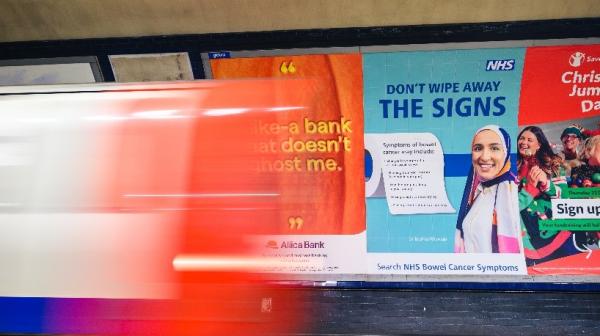
In October, RM Partners North West and South West London Cancer Alliance ran a campaign to raise awareness of bowel cancer symptoms and encourage people to contact their GP practice early if they had concerns. looks - quickly changing spacing, colours and more!
|
|
|
In England, over 36,000 people are diagnosed with bowel cancer each year, and it is the 4th most common cancer. Knowing the symptoms is important, as the earlier bowel cancer is found the more treatable it’s likely to be. Around 90% of people diagnosed with stage 1 bowel cancer survive for 5 years or more, compared with around 10% of people diagnosed at stage 4. As well as advertising on Facebook and Instagram, and digital posters across north west London the campaign featured a wide range of strategic and innovative activity including:
- a 3D billboard in Brent with a giant loo roll featuring the campaign message ‘Don’t Wipe Away the Signs’ – the first in NHS history
- on Diwali, a mobile van with the poster circulated through Ealing Road, Wembley, the Neasden Temple, Stonebridge and Dollis Hill past the 3D billboard.
- posters were displayed in underground and overground stations and in high footfall and deprived areas, including Hammersmith, Hounslow Rise, Kensal Rise, Kilburn, Shepherd’s Bush, Southall, Wembley Park, and Willesden
- radio advertising on stations including LBC, Heart, Smooth, Lyca and Sunrise
- posters were displayed on the outside of buses running through north west London.
The campaign proved successful, reaching hundreds of thousands of people through the various activities and channels. It exceeded benchmark targets for a number of the channels used, including Facebook and Instagram, Google and radio advertising. |
|
|
|
To tackle issues of NHS North West London paying in the region of £9m for void and unused bookable space each year at NHS property company sites, major restacking projects are underway with our trusts, borough teams and property companies to reconfigure and refurbish a number of underutilised sites (including Jubilee Gardens (Ealing), St Charles (RBKC), Heart of Hounslow (Hounslow), and The Meadows (Hounslow).
Stricter governance is in place, driven by Estates, to ensure more sustainable use of space and that formal lease agreements are in place between tenants and property companies.
Further work is in motion to develop integrated neighbourhood hubs across our boroughs at some of the aforementioned sites and also at Alexandra Avenue (Harrow), Parkview (Hammersmith & Fulham), Wembley Centre for Health (Brent) and White House (Harrow).
This is being conducted in collaboration with other local authority partners, with affordability being supported by a number of non-recurrent funding options including significant Developer Contributions (s106) and Community Infrastructure Levy (CIL) which we’ve successfully worked with local authorities to secure.
The estates element of the programme will look at digitisation of medical records, introducing smarter ways of working, implementing enabling booking systems and instilling best practice from proven models (e.g. the Bromley-by-Bow model).
NHS North West London Strategic Estates are supporting North and West ICB executives with reviewing estates activity as part of the merger process.
Drawing on £4.2m of available one-off national funding (plus an additional £1.7m of revenue for digitisation), North West London Estates are delivering their biggest redevelopment project yet. The programme covers 25/26 and 26/27. It involves the digitisation of medical records across 47 practices before converting vacant, already demised GP space to create additional clinical capacity for primary care.
Solutions include introduction of teleconsulting pods, conversion to clinical/examination space or installation of virtual desks. These works are expected to generate over 1 million additional appointments per annum following completion. Digitisation suppliers are now onboard and progressing digitisation activity with GPs. Delivery of UMF schemes by QTS will be commence once the programme business case is formally approved by NHS England this month.
When responding to population growth and s106, NHS North West London Strategic Estates will bid for Developer (s106) or local authority (CIL) funding on behalf of primary care, trusts and other ICS suppliers. Schemes are required to enhance healthcare capacity in the face of developer growth and significant infrastructure regeneration.
NHS North West London Strategic Estates have been successful in securing over £18m to date, which have helped to fund multiple projects including South Kilburn & Wembley Park primary care developments, Chiswick and Northwood & Pinner rebuilds, Heart of Hounslow hub development, Hillcrest relocation, and the recent Cloister Road redevelopment and teleconsulting pods project.
The team are working closely with developers to secure and prepare space for health facilities across a number of sites including Southall Park Avenue & Gasworks sites (Ealing), the old GSK site (Hounslow), Heathrow Villages and the old Nestle Canteen (Hillingdon).
Imperial and London North West University Healthcare Trusts have secured circa £13m of Phase 4 Public Secure Decarbonisation Funding to complete estates projects.
Following receipt of £806,000 of NHS Trust sustainability funding, Central and North West London Trust and West London Trust are forecasting lifetime energy savings of up to £1.2m
|
|
|
|
Health Service Journal (HSJ) awards
|
|
|
|
We are proud of all those NHS organisations in north west London that were highly recommended or won their categories”
Clinical Leader of the Year - Winner
Ras Kahai, Royal Brompton Hospital.
Ras is an exceptional leader who combines clinical excellence with innovation and advocacy to drive meaningful improvements across NHS care. As a wheelchair user and highly specialist respiratory dietitian, she brings invaluable lived experience alongside deep clinical expertise to address healthcare inequalities and champion transformative change.
NHS Communications Initiative of the Year - Winner
Imperial College Healthcare Trust, Call for Concern: Co-Designing Safety at the Bedside.
Call for Concern is a patient safety initiative that provides patients and families with direct access to the trust’s critical care outreach team. The project was developed using extensive user insight and co-designed to meet the needs of the diverse north west London population it serves.
Staff Wellbeing Award - Winner
London Ambulance Service, Start of Shift Project.
By implementing a series of operational changes and empowering frontline staff, the Start of Shift (SoS) project has transformed how ambulance crews prepare for their shifts. The initiative has delivered faster dispatch times, enhanced patient care, and improved staff wellbeing alongside greater overall efficiency.
Towards Net Zero Award - Winner
Royal Brompton Hospital, Catering Team.
Royal Brompton Hospital’s catering team has transformed its food services using technologies like Leanpath, plant-based menus, bio waste processors, and charity partnerships with organisations such as the Felix Project. These initiatives have delivered a 40 per cent reduction in food waste and cut carbon emissions by 74 tonnes CO₂e over two years, while maintaining high patient satisfaction.
Driving Efficiency through Technology Award - Highly commended
Imperial College Healthcare Trust: VESP - Very Extended Scanning Pilot.
This is designed to address backlogs in diagnostic imaging. It involves providing late-night MRI scanning (between 8 pm and midnight) to reduce patient waiting times, and uses remote scanning technology to allow clinicians to work off-site.
Patient Safety Award - Highly commended
London North West University Healthcare Trust: Addressing Skin Tone Bias: Inclusive Skin Assessment Initiative.
This initiative addresses significant health inequalities by enhancing pressure ulcer prevention specifically for patients with darker skin tones. The trust developed the programme after realising that traditional assessment methods often fail to detect early warning signs in non-white skin.
|
|
|
|
|