Welcome to your July Newsletter
|
|
|
|
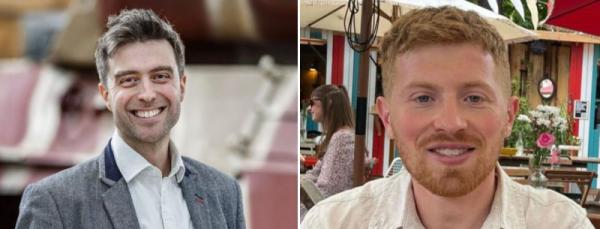
We are pleased to introduce our two new board members, Nick Booth and Tom Mainwaring-Evans, who have already joined us in supporting our work.
This issue features news from the Reducing the Risk: Hazards in Collections project, which was presented at the ICOM 2026 Conference, as well as Accreditation achievements from museums across our area. Read on to learn how our Connected for Change project has been working with museums in Somerset.
As always, we've included the latest sector news, funding opportunities and updates from across the museum community.
|
|
|
|
We'd like to welcome two new additions to our our Board, Nick Booth and Tom Mainwaring-Evans.
Nick is Director of Curatorial Services at The Tank Museum in Dorset. The service includes six teams of professionals with a diverse array of knowledge and specialisms –Archive & Objects Collections; Research; Exhibitions; Vehicle Collections; Vehicle Operations; Workshops. He has worked at institutions in a few different areas of the country – including London, Bristol and Shropshire, and is delighted to be back in the South West.
Tom is a Chartered Environmentalist with a passion for helping organisations create positive environmental and social impact. His experience spans sustainability, environmental management, organisational culture change and skills development. Alongside his professional work, Tom has a lifelong enthusiasm for history and heritage and a deep appreciation for the role museums play in preserving, interpreting and sharing our collective stories.
In June Nick and Tom attended their first Museum Development South West board meeting. We look forward to working with them both over the course of their terms!
|
|
|
|
Reducing the Risk: Hazards in Collections
|
|
|
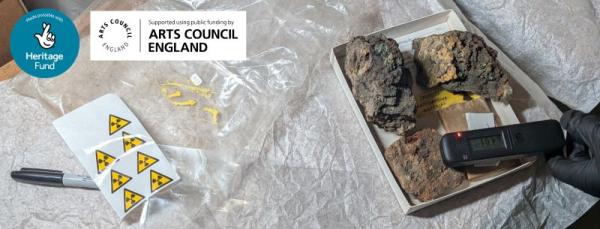
Thanks to funding from National Lottery Heritage Fund and Arts Council England, we ran an innovative project with partners from the Conservation and Museums Advisory Service at Wiltshire & Swindon Heritage Centre. 12 conservators received specialist training in dealing with the 11 most common hazards found in museum collections. We then rolled out nine training sessions for 135 delegates from 61 museums who joined the project. Each museum received a bag of kit including PPE and materials for isolating and labelling hazards. The training covered arsenic, asbestos, cellulose nitrate film, mould, controlled drugs, explosives and energetic material, firearms, kinetic objects, lead, mercury and radiation. Despite the rather scary topics, the trainees were remarkably upbeat and enthusiastic, describing it as “the best training I’ve ever had". A small grant programme allowed 16 museums to benefit from further specialist support, including having radioactive objects tested and explosives removed. The museums are now surveying their collections, identifying hazards and listing them on a Hazardous Objects Register before writing a Hazardous Objects Management Action Plan. At the end of June our Conservation Development Officer delivered a talk on the learnings and successes of the Hazards in Collections project at the ICOM 2026 Conference. If you would like to start the process of making your collection safer, there are some great resources on our website. You can start by sharing our friendly but factual short animation on hazards in collections, then download our illustrated handbook and our template for a Hazardous Objects Register. There are some case studies from museums to show you what the experience can be like. If you need further advice, please get in touch with our Conservation Development Officer. |
|
|
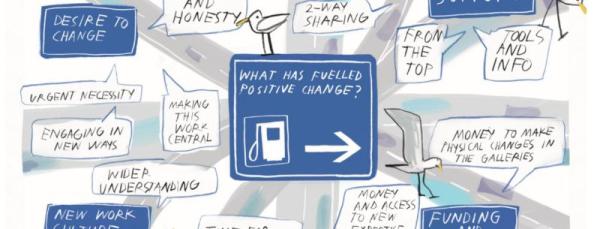
Becoming a truly welcoming, inclusive and representative museum is an ongoing journey- and one we can make more effectively together. A new network has just been launched in Somerset for anyone who wants to explore how their museums can become more relevant and welcoming. Clare Ferdinando, Cultural Producer for our Connected for Change project, and our Somerset Museum Development Officer, Rachel Bellamy, are leading the network. The theme for each session will come either out of discussions at previous sessions, or from suggestions made by attendees. Our first online session in June focussed on Oral History Projects and was joined by trustees, paid staff and volunteers, including curators, volunteer co-ordinators, learning and engagement leads. Eleanor Moore, our Sustainable Volunteering Officer, has experience of running oral history projects and shared an overview of the principles and practices of running such projects to kickstart our discussions. A rewarding aspect of the session was that people shared their own experiences and tips with each other during the following discussions, establishing new connections and creating a rich session. Our second session takes place online on Thursday 16 July, 1:45pm-3pm. Following on from our previous oral histories session, we will be exploring how to work in partnership to highlight and share diverse voices and stories in our museums. Louisa Adjoa Parker will share her reflections and be available for questions. Louisa Adjoa Parker is a writer and poet of English-Ghanaian heritage who lives in South West England. Louisa has written extensively about ethnically diverse history and rural racism, as well as writing works as an Equality, Diversity and Inclusion consultant. She is a sought-after speaker and trainer on rural racism, black history and mental health. If you volunteer or work with museums in Somerset and would like to attend a session or just express interest, contact Rachel Bellamy. |
|
|
|
This month please join us in congratulating the following museums for achieving Accreditation:
|
|
|
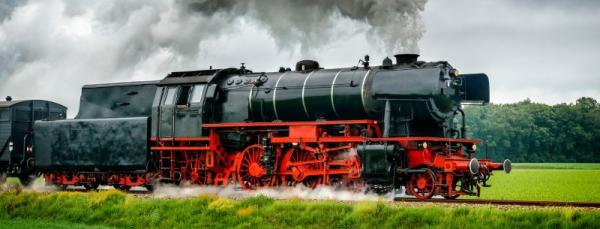
Free 'Ask a Transport, Engineering or Technology Curatorial Specialist' Sessions The Association of British Transport and Engineering Museums (ABTEM) in partnership with London Transport Museum are offering specialist support to museums with collections that include industrial, transport or engineering related objects. The specialist offering support is Lis Chard-Cooper, an ABTEM Committee member and Vehicles and Engineering Curator. Lis has over 25 years’ experience working with a range of different industrial, science and engineering collections across the country. Support can take whatever form is most useful to the enquirer, for example online advice sessions, quick email support or even a site visit within the UK. Should any on-site visits be needed the recipient museum will be expected to cover any travel costs. This activity won't be charged but ABTEM would like the recipient museum to complete a short survey to help shape the future support it can offer. If you have a question or want some guidance, please email with your query, institution, size of collection and what type of support you are looking for.
|
|
|
Now Open: International Touring and Environmental Responsibility ProgrammeThe International Touring and Environmental Responsibility (ITER) programme supports performing arts organisations and individuals in England, Denmark, Norway, and Scotland to develop sustainable approaches to international touring. The programme is structured as two free interactive seminar series at two levels – both delivered online. Participants will also have the opportunity to apply for project funding. Applications close 5pm, Tuesday 1 September.
|
|
|
Local Government Reorganisation: Museum Readiness ResourcesLocal Government Reorganisation (LGR) will bring significant change to local authority structures across England between 2026 and 2028. To support museums through this period, Arts Council England has developed a set of practical resources to help services prepare. Available resources include a museums readiness checklist, data audit prompts and more. The checklist also includes specific guidance to support advocacy and help you prepare for potential changes in local authority support and funding.
|
|
|
Kathy Callow Legacy FundThe South West Federation of Museums & Art Galleries is the custodian of the Kathy Callow Legacy Fund. The fund awards a single annual grant of £1,000 to a small, Accredited museum in South West England towards the costs of care, conservation and display of social history collections. This may include conservation, exhibitions, improving stored collections or public engagement. To be eligible for a grant, applicants must be a charity registered with the Charity Commission of England and Wales and have an annual income of less than £600,000 in the last set of published accounts. The grant must result in a long-term asset for the museum and the grant must be for public benefit. The application deadline is Monday 28 September 2026.
|
|
|
Garfield Weston FoundationGarfield Weston Foundation is a family founded grant-maker that gives money to support a wide range of charities across the UK. In total they donate around £100 million each year. The foundation supports a wide range of charities that make a positive difference, working in different sectors in the UK. These include welfare, youth, community, environment, education, health, arts, heritage and faith. Grants range from £1,000 to several million pounds, depending on each charity’s size and scope of work. Grants can be for your organisation’s running costs, for a specific activity or for capital projects.
|
|
|
The best ways to get in touch are via the form on our website or by emailing museum.development@bristol.gov.ukIf you think a colleague or friend would like to keep up to date with Museum Development South West, please forward this email or encourage them to join our newsletter by clicking below: |
|
|
Image credits:
- Museum Development South West (MDSW)
- Nick Booth
- Tom Evans
- MDSW
- MDSW
- Canva
Museum Development South West content: |
|
|
|
|