In the news...
for June 2025
|
|
from the Institute of Mental Health, Nottingham
|
|
|
|
|
Welcome to our latest monthly round-up of news and events from the Institute of Mental Health.
We once again begin our news round-up by celebrating our research colleagues here at the Institute. Last week we hosted our annual Research Day, an opportunity for early-career researchers to showcase their work. The breadth of topics was inspiring, presented with such enthusiasm. We welcomed Professor Matthew Broome to deliver our plenary session, which was a great pleasure. Congratulations not only to our prize-winners, but to everyone who took part, presented posters and worked behind the scenes - the day was a great success.
At a time when universities and healthcare services face challenges and uncertainties, it's rewarding to read about the innovative research taking place here at the Institute which will inform policy and practice in the future.
|
|
Professor Martin Orrell
Director, Institute of Mental Health
|
|
|
Institute of Mental Health
12th annual Research Day
|
|
|
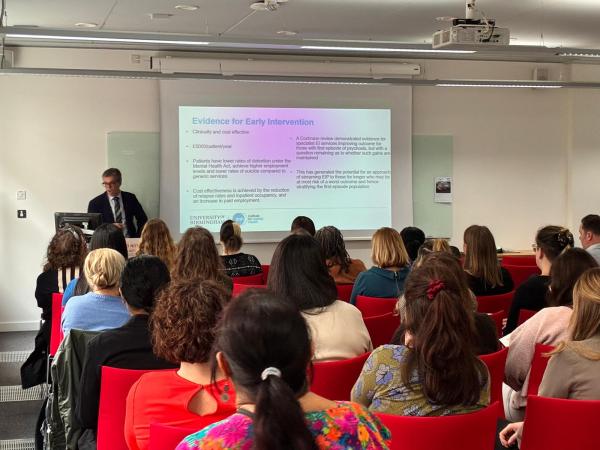
On June 6th, we hosted our 12th IMH Research Day, highlighting the work of our doctoral candidates and early-career researchers. We were delighted to welcome Professor Matthew Broome (Professor of Psychiatry and Youth Mental Health) to deliver our plenary talk: 'Interdisciplinary mental health: from philosophy to applied translational research’. Our Public Involvement Lead, Kate Horton, followed this with an informative presentation about engaging and involving the public in research.
The day continued with a fascinating day of speakers and poster presentations, ending with celebrations as we we announced the following prize winners:
The Craig Dixon memorial prize for Best Oral Presentation:
Dr Lucy Webster - Boosting the effectiveness of neuromodulation treatments
Runner-up for Best Oral Presentation:
Dr Rachael Carroll - Meeting intimacy needs of older people in care homes – is this the final taboo? Results of a pilot study
The Peter Bartlett prize for Best Poster:
Dr Ashleigh Charles – Navigating institutional logics: an ethnography of mental health peer support worker implementation.
We also took the opportunity to present our IMH STAR Award 2025 - Best Contribution to Research Facilitation and Development. This award went to Darren Wright, for his contribution to the set-up and delivery of the 'Wellbeing in the Woods' project. Congratulations Darren!
During the event we also awarded our IMH 2024 Publication Prizes - details of all the winners can be found on our website.
Many congratulations to our prize-winners, and to all who presented at the Research Day. It was wonderful to see the breadth of ideas and research currently taking place at the Institute of Mental Health. We look forward to doing it all again next year!
|
|
|
Congratulations Dr Eirini Kontou!
|
|
|
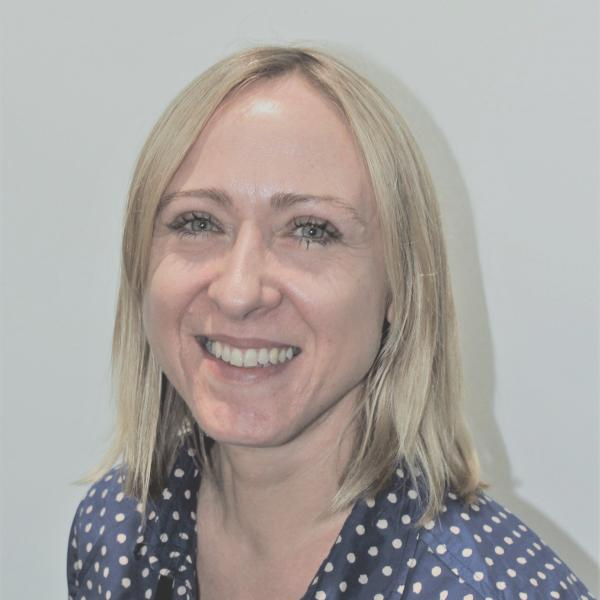
IMH colleague and lead investigator for the OPTIMISE project, Dr Eirini Kontou has been made Associate Professor at the University of Nottingham. Eirini is also a Clinical Psychologist at Nottinghamshire Healthcare NHS Foundation Trust. She has a long-standing interest for supporting research aimed at improving psychological care after stroke. Eirini works clinically in an inpatient stroke unit and her research is currently funded by a Clinical Academic Leadership Award from the NIHR(expand NIHR if not referred to elsewhere). Congratulations Eirini!
|
|
|
|
|
New paper explores the effectiveness of brief interventions in reducing self-harm frequency.
|
|
|
Forum for mental health technology innovators
|
|
|
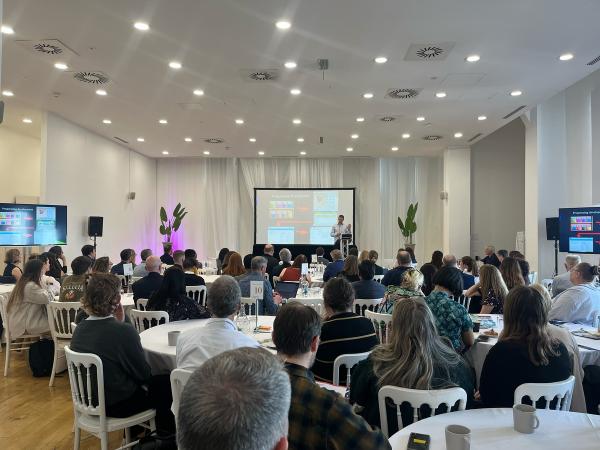
Our NIHR MindTech colleagues hosted a Forum for Mental Health Technology Innovators in Liverpool recently. One of the highlights was a session which gathered together digital mental health innovators, NHS healthcare trust leaders and innovation teams, academics, and innovation support teams to discuss priorities and opportunities in digital mental health.
Key discussions included:
➡️ Innovators needed access:
Access to people with lived experience of different conditions, access to clinicians, and access to funding and support to stay alive as a company.
➡️ They had gaps in knowledge:
Understanding the NHS, clinical pathways, procurement, how to engage people with lived experience.
➡️ Evidence gaps:
A lack of real world evidence for some of the most promising technologies amongst other issues.
A number of needs were identified, along with ways in which MindTech could help and support innovators. To read more about the event, its outcomes, and what MindTech can offer, visit the new MindTech LinkedIn page!
|
|
|
|
Forensic risk assessment project – protocol published
|
|
|
CoRAS (COllaborative Risk ASsessment and management across the secure mental health pathway in England) is funded by the NIHR Policy Research Programme. It will evaluate the current use of risk assessments and management planning in adult secure mental health services, and if a more consistent collaborative approach to these practices would improve patient experiences and outcomes.
Dr Daniel Whiting, Honorary Consultant Forensic Psychiatrist at Nottinghamshire Healthcare NHS Foundation Trust and Clinical Associate Professor in Forensic Psychiatry at the University of Nottingham, and Professor Seena Fazel, Professor of Forensic Psychiatry at the University of Oxford and Honorary Consultant Forensic Psychiatrist at Oxford Health NHS Foundation Trust, will lead the project. They’re supported by Nottinghamshire Healthcare NHS Foundation Trust colleagues Dr Cat Jeynes (Senior Research Delivery Officer), and Naomi Clifford (Research Assistant). Co-investigators include specialist academics working at the Universities of Nottingham and Manchester, and an experienced patient and public involvement (PPI) leader and expert by experience from the charitable organisation, Rethink Mental Illness. The study will run until March 2026 – the protocol can now be viewed in BMJ Open.
Meanwhile, Dr Whiting, along with Tom Stephenson of King’s College London, blogged for the Mental Elf, sharing their review of a recent paper in the Lancet. They highlight the under-researched area of prison mental health and examine this study of Mentalisation-Based Therapy (MBT) for Antisocial Personality Disorder (ASPD) in the prison setting.
Blog - Mentalisation-based therapy for anti-social personality disorder shows promise in rare prison-based trial - National Elf Service.
|
|
|
|
New Research Alert: Understanding Tourette Syndrome Through a Psychological Lens
|
|
|
A new systematic review from Charlotte Petter, Dr Camilla Babbage, Dr Kareem Khan and Dr Bethan Davies, who applied the Common-Sense Model of Illness Representations (CSM) to explore health beliefs about tic disorder and Tourette syndrome (TS) in individuals with tic disorders and their caregivers – and understanding how they perceive and manage these conditions. Here are some key takeaways worth sharing:
🧠 Perceptions Shape Experiences: Using the CSM framework, the review found that beliefs about the identity, cause, timeline, consequences, control, and emotional impact of TS significantly influence how individuals understand their tics, and how this influences how they cope with it and seek treatment.
📉 Consequences Are Profound: TS affects education, employment, social relationships, and mental health. Stigma, bullying, and discrimination are common, intertwining with many aspects of everyday living – and leading to isolation and reduced quality of life.
💬 Emotional Toll Is High: Feelings of abnormality, anxiety, shame, and frustration are prevalent. Both individuals with TS and their caregivers experience emotional distress, often compounded by societal misunderstanding.
🧩 Misconceptions Persist: Many still associate TS primarily with coprolalia (involuntary swearing), despite it affecting only a minority. This fuels stigma and misdiagnosis.
🛠️ Control and Coping: While tics are involuntary, many report using suppression or masking strategies—often at a psychological cost. These coping mechanisms mirror those seen in other neurodevelopmental conditions like autism and ADHD.
📚 Psychoeducation Is Key: Improving understanding of TS among patients, families, and healthcare professionals can reduce stigma, help guide informed decision making for treatment and management options, improve treatment engagement, and support better outcomes.
🧪 Implications for Practice: The review highlights the potential of psychological interventions—like Acceptance and Commitment Therapy (ACT)—to support identity, self-acceptance, and emotional well-being in people with TS.
👨👩👧 Caregivers Matter Too: Parents’ beliefs about TS influence diagnosis, treatment decisions, and family dynamics. Supporting caregivers is essential for holistic care.
💡 This review is a call to action for clinicians, educators, and policymakers to consider the lived experiences and beliefs of those affected by TS. Understanding these perceptions can lead to more empathetic, effective, and person-centered care.
🔗 Read the full open-access article
|
|
|
|
Hear why public contributors from the Midlands got involved in dementia research – and the difference their voices make
|
|
|
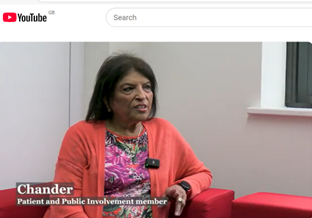
In this video, NIHR Applied Research Collaboration East Midlands (NIHR ARC EM) Patient and Public Involvement members shared their personal stories about how and why they got involved in dementia research. Created for Dementia Action Week (19th – 25th May 2025), their experiences highlight the difference public contributors can make to research. Watch their inspiring stories and see how you can #BePartofResearch too. This study is funded by the NIHR ARC-EM and Alzheimer’s Society. The views are expressed are those of the authors and not necessarily those of the NIHR or the Department of Health and Social Care.
|
|
|
|
Psychological treatments should be available for people with bipolar disorder
|
|
|
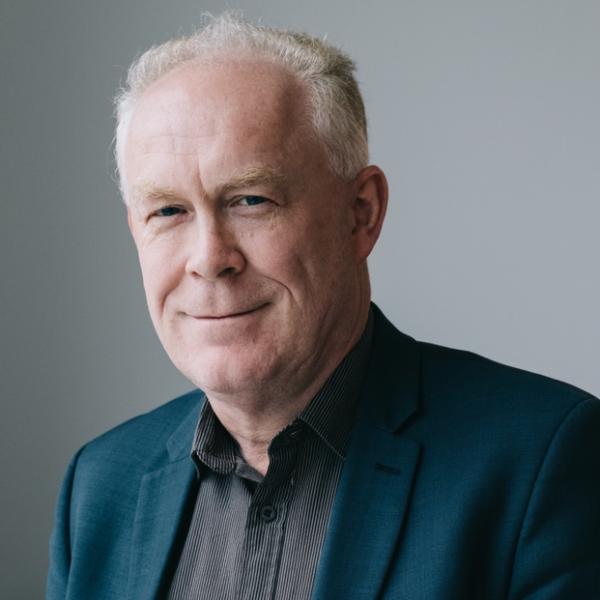
Recent findings from our Centre for Mood Disorders support recommendations by the National Institute for Health and Care Excellence (NICE) that psychological treatments should be available for people living with bipolar depression.
The individual trial patient data meta-analysis (six randomised controlled trials (RCTs), including one led by Professor Richard Morriss) confirms NICE and other meta-analyses of RCT results.
“Psychological treatments are effective for bipolar depression. The data in this paper extends these findings to all levels of severity of depression in bipolar disorder. The research supports NICE recommendations that psychological treatments should be available for bipolar disorder, something that our local NHS Trust does provide.” Professor Richard Morriss
View 'The clinical efficacy of psychological interventions for bipolar depression: a systematic review'.
|
|
|
|
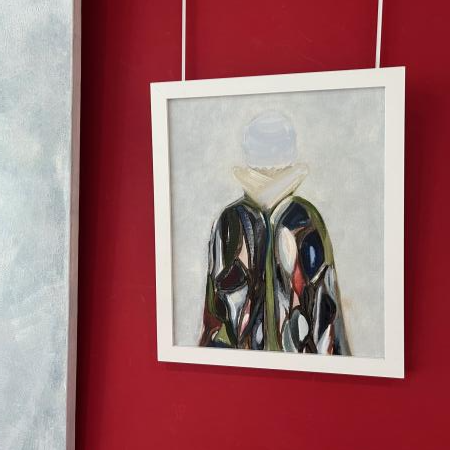
'Light' by Catherine D'Arcy Saunders
There's still time to view this body of work, exploring the broad concept of Protection and Light. It is born out of a desire to help understand and navigate our lives in a postmodern era of ongoing global unrest and environmental uncertainty. Some of Catherine's paintings are large, abstract and expressionistic. There are underlying motifs within the paintings associated with the surface of skin, materiality from archival lace research and her own personal experiences of ceremony and the spiritual.
You can view the artwork at the Institute, Monday to Friday: 8.30am - 4.30pm.
|
|
|
|
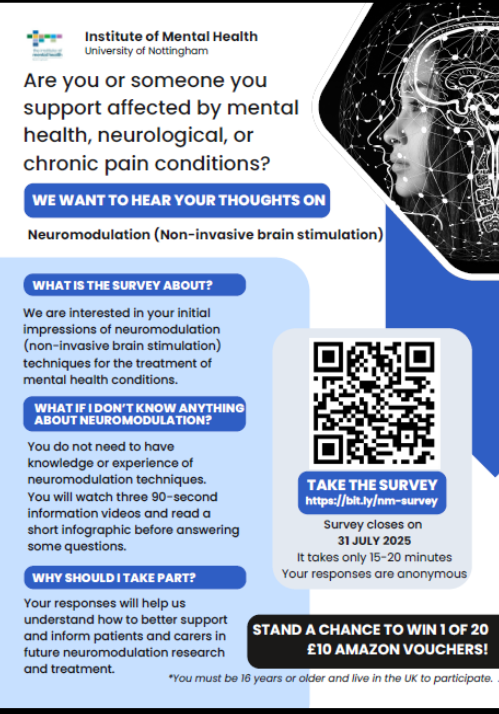
Researchers at the Institute of Mental Health invite you to take part in a survey
|
|
|
|
Are you, or someone you support, affected by mental health, neurological, or chronic pain conditions? Colleagues from our Centre for Translational Neuroscience invite you to complete a survey on neuromodulation. Led by Dr Paul Briley, it's an online survey to assess prospective acceptability of non-invasive brain stimulation for mental health conditions. Dr Briley states, “Our hope is to use the findings to inform future clinical trials and patient and clinician information resources, and address patient concerns and barriers/challenges to access.” The survey closes on 31st July 2025. View and take part in the survey. |
|
|
Applications for Cohort 3 of the Institute's Patient and Public Involvement (PPI) Training course are now open
|
📅 10th Sept - 8th Oct. Every Wednesday 1pm-3pm for 5 weeks.
📍 Online via MS Teams
🎟️ £250 per attendee
ℹ️ More information about the course
|
|
|
|
This CPD accredited training programme for PPI has been designed to increase knowledge of active researchers and colleagues in health and care research and provide time to engage and build collective confidence in a shared learning space.
This programme is equivalent to 10 live learning CPD hours as a minimum for your own professional development.
|
|
|
|
📅 Wednesday 18th July 2025, 12:30 - 16:30
📍 Institute of Mental Health, NG7 2TU🎟️ Full: £50
FRN members: £30
Notts Healthcare employees: £30
Students: £20
📥More information on the Institute website
This year's symposium will take a deep-dive into some of the big questions that inform, or should inform, our everyday practice. We're delighted to be joined by guest speakers including:
Professor Pamela Taylor, Professor of Forensic Psychiatry at Cardiff University
Dr Mayura Deshpande, National Specialty Advisor in secure care to NHS England
Dr Simon Hackett, Clinical Academic AHP, Newcastle University.
View the full programme and book tickets.
|
|
📅 4th and 5th September 2025, 09:00 - 17:00
📍 Crowne Plaza, Nottingham NG1 5RH
🎟️ Two days in person: £300
Concession in person: £150
Online: £60
📥 More information on the Institute website
The international event speakers and recovery colleges panellists are beginning to be announced. Including a variety of researchers, professionals and lived experience speakers.
Visit the conference website to learn more about each speaker.
|
|
|
We would love to hear from you.
Please visit our website or follow us on our social media pages to
keep up to date with our news and updates. |
The Institute of Mental Health brings together healthcare staff and academics to lead mental health research designed to improve diagnosis, treatment, and care. We are a partnership between two highly respected organisations, Nottinghamshire Healthcare NHS Foundation Trust and the University of Nottingham. |
|
|
|
@institutemh institutemh.org.uk
|
|
|
|
|
|