|
Welcome to the latest newsletter from us here at Involvement at the Institute. It is now August and we’re noticing a little drop in content, conversations and people milling about the IMH due to people taking their summer holidays. We hope wherever you are receiving this message you are having time to relax, breathe and enjoy a bit of summer fun! 🌞
|
|
|
|
I do hope you still enjoy receiving our newsletters and staying in touch with us and if you ever want to pause these messages or get in touch about anything, then we are always here for you. We’ve got a bumper pack of information for you and a few opportunities with other universities shared at the bottom in case you are interested.
If you are doing anything you’d like to share with the audience of this newsletter or with any of the teams at the IMH then please do share it with me. I love to be able to feature your work, activities, creations and progress and it’s an honour to be able to share your pride with a wider audience.
|
|
|
Involvement at the Institute updates:
|
|
|
Institute of Mental Health updates
|
|
|
Over the last few weeks there has been lots of activity throughout the Institute of Mental Health.
More University of Nottingham staff will are and will continue to move into the IMH building space across A, B and C floors. Offices will become more populated than before and space will be occupied by more University staff who have previously not been directly linked to the core activities here in the IMH, and we welcome them all!
This is also the beginning of a new agreement within the IMH that sees Nottinghamshire Healthcare passing the management of the IMH building back to the University of Nottingham. There will be some background changes and most of these will be invisible to our visitors however core changes that will be apparent and potentially have an effect are:
- The reception area of the IMH is now permanently closed. The IMH team who are currently based in there will move up to D floor and resume their administrative duties within the main Nottinghamshire Healthcare staff group (including me) who are also based on our top floor.
- Building access – Access and entrance to the building will remain as before so you will need either an ID card with swipe access to enter the building or an arrangement for whomever you are meeting to meet you at the entrance for you to gain access. Unfortunately, this means that there will not be someone on reception who spots you waiting and invites you in and you will need someone with a key card to grant you access if you are visiting the building.
- Post and deliveries – All IMH colleagues will now need to take responsibility for the receipt of any items they have delivered to the building, as reception will no longer be open to take deliveries, and we have a place within the building for both Nottinghamshire Healthcare and University postal colleagues to drop their daily mail deliveries.
We hope that although this reception change may be a big change, we have reminded all teams in the building of their need to meet visitors at the doors and welcome them into our space. Hopefully this will create a little more of a personal touch with meetings and activities you may have in the building.
If you have any questions about these new arrangements, do get in touch. We’re happy to go into more detail about what to expect when visiting the IMH or if you have any concerns or suggestions about being physically in the IMH I would love to hear them. So do please get in touch either with me directly or to the IMHInvolve@nottshc.nhs.uk shared inbox and your questions and comments will be picked up and responded to.
|
|
|
Institute of Mental Health Public Advisory Group
|
|
|
As you may know we have a main Public Advisory Group here at the IMH who meet monthly (with a little break over the summer) and one of the activities they are frequently involved in is advice in early stage research.
If you know anyone who would benefit from the opportunity to meet with the Advisory Group to gain some early-stage advice, ideas or insight then you can pass them this link and they can fill in the form to book a slot to meet with the group.
|
|
|
|
Public Training in Patient and Public Involvement
|
|
|
National Health and Social care information:
|
|
|
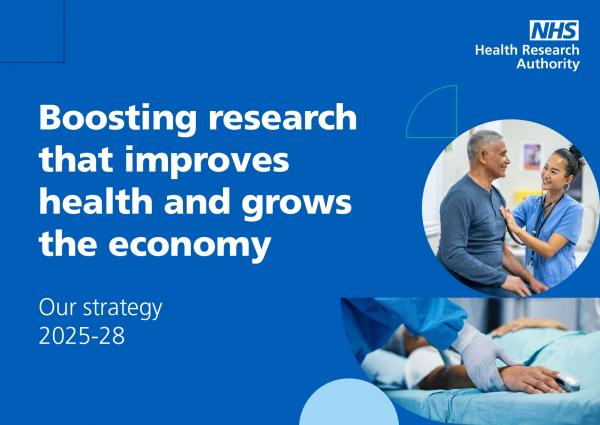
The Health Research Authority (HRA) has recently released their three-year strategy to guide their actions, intentions and support their plans from 2025 to 2028.
|
The HRA is a publicly funded body which is accountable to the Department of Health and Social Care. The HRA is a regulator and governance lead to and their purpose is to ensure research is high quality, ethically appropriate and impactful research. If you are an advisor to a research project you will hear Ethics boards and bodies mentioned, then in some cases the research team may be talking about the HRA Ethics board. The Ethics boards run by the HRA are consulted in any research plans that will involve patients and users of NHS services as participants to the research. These studies must be approved by the HRA before the projects can begin.
The latest strategy document from the HRA was developed with their staff, community of volunteers, public contributors and partners from across the health and social care research sector.
The strategy defines 3 objectives that will shape their work supporting the UK government's objectives for health and growth:
- supporting UK growth in life sciences
- helping reduce health inequalities
- increasing the impact of money invested in research
This type of strategy document might be boring to some people but interesting to others so I share it here because I believe the more we know and understand of how research works, the easier it can be to become involved in a more equal and accessible way.
To read the full strategy online you can head off to the HRA website using this link straight to the strategy or you can look at the wider objectives and “about us” of the HRA within this page.
|
Here at the IMH and in other places when we talk about Patient and Public Involvement, we are passionate about meaningful, genuine and inclusive involvement of patients in our conversations, projects and research.
|
We know inclusion of people who use and experience services, spaces and have living experience improves the design, delivery and honest evaluation of services and that it is vital to ensuring better health and care outcomes for patients. Yet we (and many others) know the practice of how the NHS partners with patients and values their contributions is inconsistent to say the least.
On this topic of inconsistencies and specifically models and styles of involvement; payments, rewards, recognition when supporting the NHS, we have a blog and report to share with you.
The Patient Association has recently partnered with NHS England in the East of England region to explore how patients and people with lived experience want to be rewarded, recognised and remunerated (paid) when they support the NHS to improve services.
You can read a short blog with recommendations here and you can read the full report with recommendations and you can read the full report with all the detail and suggestions here on the Patient Association website.
|
The NHS has launched its first ever review to tackle health inequalities experienced by LGBT+ people, including access to mental health care, cancer screening and primary care services.
|
The detailed work, announced this week, will help the NHS understand how it can do more to meet the needs of LGBT+ people, including understanding barriers to accessing healthcare and the impact of LGBT+ health inequalities on outcomes and patient safety.
"To succeed, this review must put the voices of LGBT+ patients at the heart of change. We look forward to contributing and seeing the review’s recommendations later this year" said Rachel Power, Chief Executive of the Patients Association.
Read the Patients’ Association response to this work.
|
|
|
Health Data Research UK (HDR UK) has just published a literature review exploring public attitudes to health data and health research across the UK.
|
We’ve published it so anyone working in this space can use it to help direct their public engagement work. The findings have been instrumental in helping us to develop our own approach to building a community programme to engage under-served audiences with health data science.
Read the report and find out more about our community engagement plans
Any questions, please reach out to involvement@hdruk.ac.uk
|
|
|
Opportunities to support research, services and participate in research:
|
|
|
Involvement opportunity with Kings College London
|
Researchers at Kings College London want to understand how autistic young people (aged between 16 and 24 years) from different backgrounds, manage the way they present themselves to others. This might include things like hiding parts of their identity (e.g. how they speak, behave or express emotions) or changing how they act to fit in or feel safe. This is sometimes called camouflaging or impression management.
Lots of people adjust how they act to deal with stigma and discrimination based on who they are. Autistic people often camouflage too, but most studies haven’t looked at how many different aspects of identity (e.g. someone’s race, sexuality or culture) shape and influence the meaning and consequences of camouflaging and impression management in autistic young people.
This activity will consist of:
📍 Location: Online call via Microsoft Teams (or alternative method).
📋 Task: One-to-one consultation to review a new research proposal and give their view on language used, interview questions, accessibility and power dynamics.
An outline of the proposal and potential interview questions can be emailed to people ahead of the meeting if preferred.
The people they wish to involve are:
- Aged 16 to 24
- Have a stable internet connection
- Identifies as autistic
- From varied backgrounds, may also identify as holing one or more minoritised identities.
💷 Payment: £25 for the 1 hour call
📩 Contact: For more information and to express an interest, please contact Megan Hurry, Trainee Clinical Psychologist at megan.hurry@kcl.ac.uk
Deadline Friday 5th September 2025
|
|
|
People with both long-term mental health conditions and (related or unrelated) physical health conditions are needed to feedback on their experience and any problems they have faced.
|
Researchers at Rotherham Doncaster and South Humber NHS Foundation Trust are interested in any support people have (opr haven’t) received related to their mental health, what worked, if there are any barriers to accessing mental health support and how access to support can be improved for people who have both long term mental health condition(s) and physical health condition(s).
📍Location: Online via Teams or face to face at Rotherham Doncaster and South Humber NGS Trust, Tickhil Road site.
📋Task: This is a request for people to be involved in: A one to one online interview, an online focus group or an in person focus group
If you are interested there is also the opportunity to take part in future paid research for which funding will be applied for and with your support and for which you will be reimbursed.
Person specification:
- Aged 18 years and over
- Diagnosis of any mental health condition
- AND diagnosis of any long-term physical health condition
- Have stable internet access for the online meetings
💷 Payment: £25 for one hour of your time
📩 Contact: for more information or to express an interest, please contact Victoria Laker Clinical Research Fellow by email at Victoria.Laker@nhs.net. Alternative contact for the team is Rdash.phobservatory@nhs.net
Deadline Monday 1st September 2025
|
|
|
Autistica who are a national charity have recently been advertising some healthcare resources and online information designed with autistic people.
|
If you think these resources would be helpful for you and your friends, family and peers please feel free to use them and pass them on.
The Autistica Tips Hub is available to help people find reliable autism tips and evidence -based resources on topics such as diagnosis, anxiety, financial resilience and much more.
|
|
|
|
|