In the news...
for FEBRUARY 2026
|
|
from the Institute of Mental Health, Nottingham
|
|
|
|
|
Welcome to our latest newsletter. This edition highlights recent progress across our centres of excellence, from new funding and study opportunities to key milestones in ongoing work. Together with our partners, we remain focused on generating robust evidence that can inform policy, practice and, ultimately, improve outcomes for people using mental health services. Thank you for your continued support and engagement.
|
|
Professor Martin Orrell
Director, Institute of Mental Health
|
|
|
New partnership with University of Lincoln secures multi-million-pound award
|
|
|
The University of Lincoln, in partnership with the University of Nottingham and the Institute of Mental Health, has been awarded £10.96 million by the National Institute for Health and Care Research (NIHR) to establish an NIHR Mental Health Research Group (MHRG) in Lincolnshire, led by Professor Nima Moghaddam and Professor David Dawson from the University of Lincoln.
The award forms part of a £55 million national NIHR investment creating five new Mental Health Research Groups across England, focused on strengthening mental health research in areas with high levels of need and historically limited research capacity. The IMH will provide mentoring, training and support to the Lincolnshire Unit for Mental Health Research (LUMHR) bringing our internationally recognised strengths in programmatic research and research infrastructure development. Congratulations to Professor Martin Orrell, Professor Mike Slade, Professor Richard Morriss, Dr Anna Tickle, and Dr Stefan Rennick-Egglestone who will be leading on our involvement with this exciting new partnership.
|
|
|
|
|
Royal surprise for MOVE Against Cancer's exercise group
|
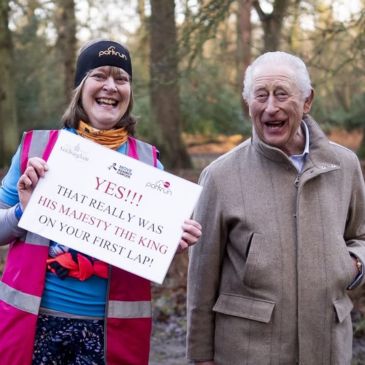
Participants at the monthly 5k Your Way (5KYW) parkrun were left speechless as King Charles III paid a surprise visit!
King Charles, who has been on his own cancer journey, greeted the Sandringham 5KYW group for their first lap recently.
MOVE Against Cancer's 5k Your Way, co-founded by Institute colleague, Dr Lizzie Paddock, offers a welcoming and supportive opportunity for people impacted by cancer to exercise and meet others.
Find your local 5KYW group
|
|
|
Forensic Research Group - new findings
|
Colleagues from our Forensic Research Nottingham (FRN) group continue to demonstrate the research possibilities in this complex field with their latest findings. In a recent paper, they explored Vitamin D supplementation in an NHS prison cohort. Meanwhile, Dr John Tully is among researchers investigating brain function in antisocial personality disorder.
If you work in forensic mental healthcare, why not complete this questionnaire exploring experiences of managing suicide and self-harm (SASH) risk in patients? The study is open to staff working in prisons and Young Offenders Institutions (YOI).
Find out more and take part
|
|
|
|
SATURN trial reaches milestone
|
Congratulations to the SATURN trial team and participants on reaching the halfway mark in recruitment!
"We are thrilled to announce that the SATURN study has officially reached the halfway mark in recruitment, with 162 families now enrolled in our trial! A huge heartfelt thank you to everyone who has supported the study so far and a special shout-out to our wonderful staff, who work tirelessly every day to give our families the best care possible. We are hopeful and optimistic for a successful year ahead!" Aliyah Khanum, Trial Coordinator
If you want to learn more about the SATURN study, please visit our website: SATURN - Institute of Mental Health
|
|
|
Call for chapter proposals
|
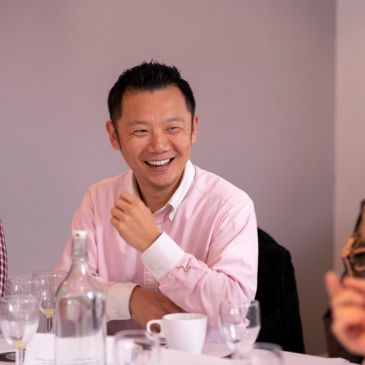
Dr Yasu Kotera (pictured) has been commissioned by Edward Elgar Publishing to edit a new Research Handbook on Culture and Wellbeing. The volume will bring together contributions from scholars around the world to examine how cultural contexts shape the experience, understanding, and measurement of wellbeing, as well as implications for research and practice. The call for chapter proposals is now open until 31 May.
If you are interested in contributing, view further details and submission guidance
|
|
|
Welsh Senedd debate highlights urgent need for improved tics and Tourette Syndrome services for young people
|
|
|
A debate held recently in the Welsh Senedd highlighted the lack of access to specialist healthcare services for children and young people with tic disorders and Tourette Syndrome across Wales.
During the debate, led by Lee Waters MS, interventions developed in collaboration with Nottinghamshire Healthcare NHS Foundation Trust and the University of Nottingham were referenced as potential solutions, including the ORBIT trial, led by Institute and NIHR MindTech HealthTech Research Centre colleagues Professor Chris Hollis, Dr Charlotte Hall, and Kelly-Marie Prentice. Director of our CANDAL Centre of Excellence, Professor Maddie Groom is working closely with Tourettes Action and Lee Waters to raise the profile of tics and Tourettes.
Read about the Welsh Senedd debate and related research
|
|
|
|
New paper finds Body Dysmorphic Disorder overlooked
|
|
|
A new paper, led by Professor Kapil Sayal (pictured) and his team, examined children and young people referred to UK Child and Adolescent Mental Health Services (CAMHS) who may be at risk of body dysmorphic disorder (BDD). Among 307 referrals of children and young people aged 11–17 years, around 6% showed a high likelihood of BDD, yet none received a clinical diagnosis. Those at risk were predominantly female and commonly experienced severe anxiety, depression, and high levels of self-harm. Despite this, their referrals were no more likely to be accepted or prioritised. The findings highlight that BDD is relatively common but frequently overlooked in routine services, underscoring the need for better awareness, screening, and early identification in young people.
Characteristics and 12-month outcomes of clinically-referred children and young people at risk of body dysmorphic disorder
|
|
|
|
Delivery of magnetic energy to the brain is a cost-effective treatment option for patients with depression, finds a new study
|
|
|
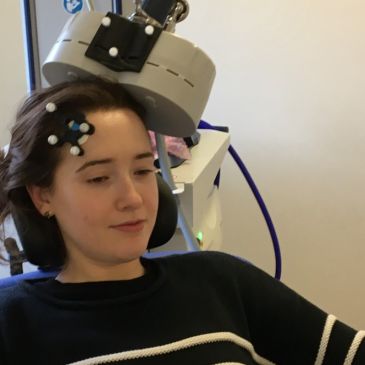
A major new study has found that transcranial magnetic stimulation (TMS), which applies magnetic energy to the brain, can be a cost-effective treatment option for the NHS in treating moderate and severe forms of depression that have not responded to other treatments.
The economic analysis, published in BMJ Mental Health, compared TMS to usual care in specialist mental health services, and found that TMS reduces depressive symptoms, eases pressures on informal carers and on NHS resources, and helps people get back to work. This latest paper is based on data from the BrightMind trial led by Professor Richard Morriss and supported by Nottinghamshire Healthcare NHS Foundation Trust.
Read about TMS as a cost-effective treatment for depression
|
|
|
|
Nottingham hosts national panel of experts to develop dementia risk reduction recommendations
|
|
|
A panel of experts from around the country met in Nottingham to develop recommendations for dementia risk prevention.
The National Institute for Health and Care Research Policy Research Unit in Dementia and Neurodegeneration at Queen Mary University of London (DeNPRU-QM) convened a multidisciplinary panel of 40 experts from across England, with diverse lived, academic, clinical, policy and advocacy experience, at various career stages, and of diverse gender and ethnicity, to develop actionable policy recommendations for dementia risk reduction.
The panel included Emeritus Professor Tom Dening (pictured) and Professor Martin Orrell of our Centre for Dementia, alongside the University of Nottingham's Professor Sube Banerjee. The resulting recommendations have been published in the journal Nature Reviews Neurology.
The Nottingham consensus on dementia risk reduction policy: recommendations from a modified Delphi process
|
|
|
|
INVOLVEMENT AT THE INSTITUTE
|
|
|
New Patient and Public Involvement (PPI) reimbursement guidance - out now
|
|
|
Last chance to help shape research priorities
|
|
|
|
Can you help to identify the top 10 research priorities for adult secure and community forensic mental health services in England, Scotland and Wales?
This brief survey is looking for questions that research could answer to improve these services. Any health or social care professional working in or with secure/forensic mental health services, any person with lived experience of such services, or any carer/family member to someone who uses these services, is invited to take part in the survey. The survey will close at the end of February 2026.
The project is being led by Dr Daniel Whiting, Clinical Associate Professor in Forensic Psychiatry at the University of Nottingham / Nottinghamshire Healthcare NHS Foundation Trust jointly with Dr Howard Ryland, University of Oxford, and in partnership with the James Lind Alliance.
Read more about the survey and take part.
|
|
|
Next steps for BRIDGE study - now seeking parents and young people 📢
|
|
|
PhD student Alexia Jeayes is exploring the challenges and enablers of designing, delivering and evaluating digital mental health trials for children and young people. By gathering the perspectives of those involved in these trials, from clinicians to young people, this project aims to identify practical solutions to improve future studies and ensure that digital mental health interventions can be implemented effectively in clinical settings.
Surveys are now open for young people and caregivers/parents:
View and take part in the online survey for young people
View and take part in the survey for parents/caregivers
Alternatively, email Alexia Jeayes
|
|
|
|
Are you a University of Nottingham researcher (staff or doctoral student) in mental health, neurodivergence or substance use? Do you also have lived experience in these areas?
|
|
|
Study using AI to detect early-stage post-natal depression is seeking participants
|
|
|
Could you take part in a study investigating an AI-powered app monitoring mental wellbeing during pregnancy and the postpartum period.
Participants from 12 weeks pregnant to 12 weeks postpartum will use the TrueBlue app on their mobile devices over 12 weeks. The goal is to assess whether the app is safe, usable, acceptable, and how far predictions from the technology agree with standard clinical measures of depression and anxiety. The technology behind this trial has been developed by the study's partner BlueSkeye AI and was featured in a BBC Panorama episode in August 2023, exploring the positive future uses of Artificial Intelligence.
This study is led by Dr Neil Nixon in the Centre of Mood Disorders, and run in close collaboration with experts in Public Patient Involvement (PPI) and senior specialist clinicians at Nottinghamshire Healthcare NHS Foundation Trust.
For anyone interested in the trial, email the TrueBlue team or call 0115 748 6749. Alternatively view and complete the TrueBlue expression of interest form
|
Autism and ADHD research - can you help?
|
|
|
|
|
Our MindTech Colleague, Eve Park, is researching autism and ADHD. Participants are invited to take part in activities here at the IMH. If you're 18+ and:
➡️ have an autism diagnosis or in the process of getting one.
OR:
➡️ identify as neurotypical.
Could you spare 60-90 minutes completing some questionnaires and taking part in computer-based activities? Participants will receive a voucher at the end of the study.
To find out more, email Eve Park
|
|
|
📅 15 April 2026 to 13 May 2026, 1pm to 3pm
📍 Online via MS Teams
🎟️ £250
📥 More information on the IMH website
Applications are now open for our spring 2026 Patient and Public Involvement (PPI) training programme. This CPD accredited course is led by Kate Horton, our PPI Lead, and takes place on weekly two-hour sessions, via MS Teams.
This programme is designed for Early Career Researchers, future PPI facilitators and those people expected to deliver on the asks of PPI. The learning is designed to help you consider and embed meaningful PPI within your systems so you can incorporate living experiences, peer researchers and patient and public contributors to improve the relevance, acceptability and accessibility of your research.
If you’re not sure if this course is for you then please get in touch. We would love to hear from you, and we can talk about some of the content, feasibility for your own context and also discuss alternatives for your progress in this area. Email Kate Horton
|
|
📅 25 March 2026, 09:30 to 15:00
📍 Nottingham Jubilee Conference Centre
🎟️ £40 (limited concessions available*)
ℹ️ Buy tickets
*Email Dr Blandine French
You're invited to the 2026 'Hidden in plain sight: research & clinical update on ADHD in girls and women conference' hosted by our colleague Dr Blandine French,
This year’s conference will bring together clinicians, researchers, and lived-experience experts to raise awareness of gender differences in ADHD in women, with a special focus on girls and pregnancy.
Follow conference updates and announcements on LinkedIn
This conference is tailored for clinical and research staff to bring more specific insights into practice.
|
|
|
We would love to hear from you.
Please visit our website or follow us on our social media pages to
keep up to date with our news and updates. |
The Institute of Mental Health brings together healthcare staff and academics to lead mental health research designed to improve diagnosis, treatment, and care. We are a partnership between two highly respected organisations, Nottinghamshire Healthcare NHS Foundation Trust and the University of Nottingham. |
|
|
|
@institutemh institutemh.org.uk
|
|
|
|
|
|