Involvement at the Institute
March 2026
|
|
|
|
|
Welcome to another update from Involvement at the Institute of Mental Health. We appreciate you choosing to stay in touch with us and we hope you find this update interesting and useful.
|
|
|
|
Whilst an email update feels more formal than meeting up over a cup of tea and a catch up, I hope you continue to get something out of these messages. You are welcome to get in touch with me directly if you would like to see more or less of something, or if you’d like to pause or remove yourself from the mailing list. It is always a pleasure to hear from you, and I want to continue making this update relevant for you all.
I know I always start with some comment about the weather and spring really does feel like it’s trying to peek through from the rain, and now fog, but I’m going to start with something a bit more serious.
There is a lot going on in the world right now, and the world is so much closer than it has ever been with digital access to everyone’s updates 24 hours a day. So, please don’t forget, if you need to, take a break from it all. Turn off your devices for a bit or uninstall that app that gets more of your attention than you’d like and do something analogue for a while and consider it a bit of self-care.
If anyone reading this has any suggestions of what they do to look after themselves (and others), and you’d like me to share in future newsletters, please get in touch. I’d love to amplify your go-to suggestions for how we can all learn to look after ourselves, and each other that little bit better.
|
|
|
Updates from the Institute of Mental Health
|
|
There has been a lot of movement here at the Institute of Mental Health so here’s a bit of an update on it all.
Firstly, many of the people who have been based at the Institute as their place of work, are on the move. This means that we will be less 'together' physically and more spread out over NHS and University sites. However, as we learnt back in 2020, we can still meet face to face for meetings and events in shared spaces and we are well connected online too.
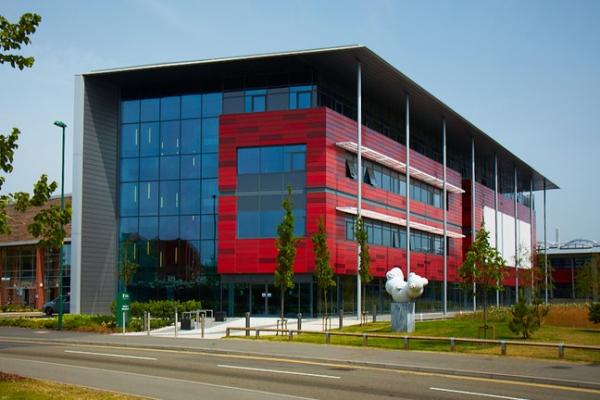
I realise for many of our visitors who are not familiar with the building (and even those who are) the closure of the IMH reception has been a big change and we know coming to a building that might feel less familiar now may add difficulties. I wanted to make sure you know, that you remain welcome to attend in person here at the Institute and if you have appointments in the building and want to see a friendly face on arrival, just let me know and I’ll make sure I’m in the building on that date to be that friendly greeter.
|
The most recent main IMH newsletter has just been published and circulated to inboxes on the main mailing list. You may receive this too or you might just get my update. If you want to see a copy of this and previous newsletters online you can visit the Institute of Mental Health website, and it will be listed as soon as it is uploaded to our website.
If you don’t already receive this newsletter and you’d like to receive it direct to your inbox you can head to our website and sign up on the Institute website and the team will be able to add you to the main mailing list.
|
Public Involvement at the Institute of Mental Health
|
I continue to work, often in the background, to help improve how we do involvement and PPI in research and how we make space for lived and living experiences in our research. I wanted to take this moment to share a few of the things I will be focusing on over the coming months. If any of this sounds like something you’d like to know more about, please get in touch.
I’ll be working with Dr Eirini Kontou who is furthering her work, with thanks to a grant from the Stroke Association. This work will be looking at how people who have had a Transient Ischaemic Attack (TIA) or ‘minor stroke’ can receive emotional and practical support remotely. It follows on from work Eirini has already done on this type of emotional and practical support being available in services. She has also worked on assessing what the clinical response and services should include for people who experience TIA or ‘minor stroke’.
If this is a subject that interests you because of your own experiences of TIA and minor stroke, do get in touch because we’d love to hear from you.
|
|
We will sadly be saying goodbye to the PIC (Patient Involvement Collaboration) that has worked with the East Midlands Cancer Alliance Centre for Psychosocial Health (EMCAVS) for some time. This group was formed with patients who had experienced the services of EMCA and were keen to give back to the service as advisors to their research and service improvement topics. If anyone from that group is reading this now, I just want to say loudly (as loud as I can from an email) that your input and commitment to such an important service has been invaluable and we’d love for you to stay in touch with us here in the wider IMH patient and public community.
|
When it comes to hands on work over the next couple of months, it is also worth mentioning that I will be running another Patient and Public Involvement training programme for researchers. This is a hugely popular course for researchers from all over the country to come together and learn more about facilitating Patient and Public Involvement work in their research. I’m really hoping that this continues to be popular because I know it is generating so many more spaces for people with lived experiences to be meaningfully involved in research. Researchers who have attended the programme talk of feeling more confident and competent in supporting members of the public to join their research as advisors and bring more Patient and Public Involvement into health and social care research.
A wonderful spin-off from the Patient and Public Involvement training programme is that we have consolidated and increased membership to our PPI Facilitators Community of Practice sessions. This brings together anyone interested in talking about PPI as a process and a set of methods to engage and involve people in research. This is a space that’s dedicated for those doing this work to come together and improve on what they do, how they do it and explore both challenges and opportunities in the work they are carrying out.
|
|
However here is my question to you, every single person reading this newsletter right now. Would you like to be involved in a public version of this Community of Practice or network?
Would you like to meet online (and with occasional face to face sessions) where there is an opportunity to network with your peers and meet others involved as Public Contributors, Lived Experience Advisors, PPI Co-Applicants and whatever other moniker or title you prefer to use in your PPI based activities?
What do you think?
Should we begin organising this through the Institute and if so, what would be important to you in this Network? Please, please, get in touch if this interests you and we can talk more
|
|
|
Image source: The International Patient and Public Involvement Network |
The International PPI Network
|
|
The International PPI Network have recently published an annual newsletter highlighting the Network’s achievements during 2025 and their plans for 2026. If this sounds interesting to you to find out more about this network you can read their newsletter attached to this message and you can find out more about them on their website.
|
Did you know that the National Institute of Health and Care Research has a place online for members of the public to register to be involved in studies – as advisors and as participants – and for researchers to advertise their studies?
|
|
The Be Part of Research registry service has been running for some time and now you can even sign up to it on the NHS App. It is the first UK-wide registry for all health and care research specialties and it gives Sponsors, Public and Researchers access to each other enabling study teams to meet new contacts and recruit participants more effectively into research.
|
|
|
Image source: Royal College of Anaesthetists |
Volunteer Opportunity available with the Royal College of Anaesthetists
|
|
The Royal College of Anaesthetists is the professional body responsible for the speciality of anaesthesia, perioperative care, intensive care and pain medicine across the UK. It is seeking an enthusiastic and committed Chair of Patients Voices at the Royal College of Anaesthetics (@RCoA). Patients Voices is a group of volunteers who support, advise and influence the College by providing patients’ views on its activities.
If this sounds like something you would be interested in and could commit to, you can find out more about the role, what is expected and how to proceed with an application. My recommendation is that this will be a very formal environment and one which will have a number of expectations on this voluntary (expenses covered) role. Find out more about current vacancies on their website, the role is 4th in the list under Volunteer Roles.
Interestingly there are also some other Patient Advisory Group roles below on the same page so if you are experienced in receiving or caring for people receiving anaesthesia, perioperative, intensive or palliative care then do take a look.
|
|
|
Get involved in research with The McPin Foundation
|
|
The McPin Foundation online have a number of opportunities currently advertised for people looking to get involved with research as advisors and as research participants. If you are looking for opportunities right now it is worth heading over to their website.
|
|
|
|
You may notice that we've had a bit of a play around with the design and look of this newsletter. We're trying to make it look a little more polished and a little more colourful. Maybe you did notice and you like it, or you don't. We'd love to hear your thoughts - especially if we've made it harder to read or even easier to follow.
Whatever you’re doing and wherever you are we hope you are enjoying life, doing well and thriving.
|
|
|
|
|