In the news...
for JULY 2026
|
|
from the Institute of Mental Health, Nottingham
|
|
|
|
Welcome to our July newsletter, where we're pleased to share another snapshot of the breadth, quality and impact of research taking place across the Institute of Mental Health (IMH).
Following on from Co-production Week, it's especially encouraging to see the principles of co-production embedded in so many of our projects. From Digital Youth to the Art of Belonging, our researchers continue to work in partnership with people with lived experience, ensuring that research is shaped by the communities it aims to serve.
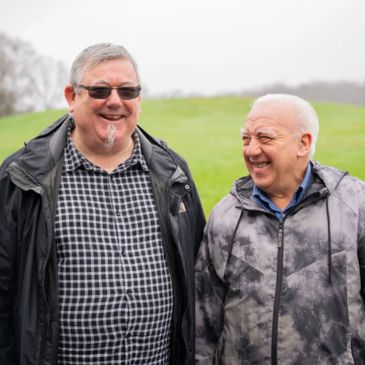
We were delighted to welcome Tom Cahill CBE, Chair of Nottinghamshire Healthcare NHS Foundation Trust, to the Institute recently. Reflecting on his visit, Tom said:
"I have always admired the partnership the Trust has with the University of Nottingham in hosting the IMH, and how important the research here is and the impact it has on the services we provide to people in Nottingham, across the region and throughout the UK."
Tom joined the Trust earlier this year following the retirement of Paul Devlin. We greatly appreciate Tom's support for the Institute and our shared commitment to advancing research that improves mental health care and outcomes. We look forward to working closely with him in the years ahead.
|
|
Professor Martin Orrell
Director, Institute of Mental Health
|
|
|
|
Institute welcomes Singapore research delegation
|
|
|
|
Comparable in name and vision, but working on different continents, we were delighted to welcome colleagues from the Singapore Institute of Mental Health to our very own IMH at the start of July. The visit, co-ordinated by the Medical Research Council, included a delegation of academics, researchers, clinicians and funders who met with IMH research leads. Professors Chris Hollis, Stephen Jackson, Ellen Townsend, Marcus Kaiser, Richard Morriss, and Dr Zia Katshu. They discussed large scale research, and research infrastructure in the UK, presenting overviews of their work. The visit was intended as an information gathering exercise as the delegation prepares to create a new national mental health strategy for Singapore, but following the visit new collaborative opportunities have emerged and we're delighted to see what new partnerships might develop from this trip.
|
|
|
Changes to our newsletter
|
|
|
We’re making a small change to how often we share our updates. From now on, the Institute of Mental Health newsletter will move from a monthly edition to a bi‑monthly one, coinciding with the academic calendar. This gives us a bit more space to gather stories, showcase important news from our researchers, and make sure each issue feels genuinely worthwhile. You’ll continue to receive the same high‑quality insights and news, just every other month, starting with the next edition in September. If you have a story to share, email our communications team. If you've found our newsletter online, sign-up to receive it straight to your inbox
|
|
|
|
Institute staff wear red to celebrate #Red4Research
|
|
|
IMH expert responds to proposed social media ban for under 16s
|
|
|
Call for new approaches to clinical research for people with schizophrenia
|
|
|
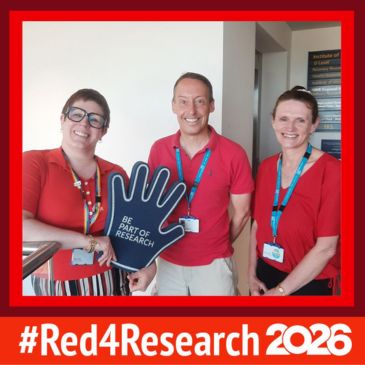
On 19 June we celebrated #Red4Research, a national initiative celebrating the people who make health and care research happen.
The campaign encourages everyone involved in research, from participants and clinicians to administrators and volunteers, to wear red and champion the vital role research plays in improving patient care. (Pictured L-R, Lou Rudkin, Darren Wright, Wendy Wheat.)
Read more about Red4Research
|
|
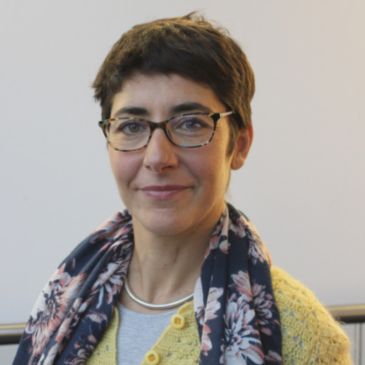
Following the recent news of a proposed social media ban for under16s, Institute colleague Elvira Perez Vallejos (pictured), Professor of Mental Health and Digital Technology, shares her expert opinion on the announcement.
“I don't think a blanket ban is a good approach. This is a policy that is politically popular and stems from a well-intentioned desire to protect children, but a blanket ban is a blunt instrument that misidentifies the root problem."
Read the extended version of Elvira's comments on our website, where she sets out the complexities of this issue.
|
|
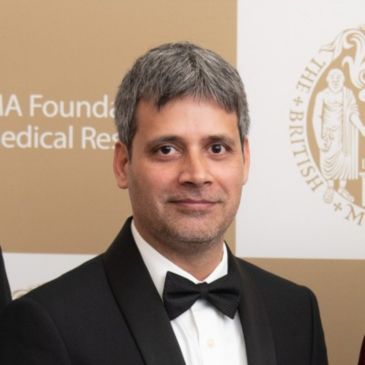
Dr Zia Katshu (pictured) of our Centre for Translational Neuroscience has co-authored an editorial alongside a team of experts calling for a bold shift in how clinical trials are designed and delivered for people with schizophrenia.
Writing in the British Journal of Psychiatry, the authors highlight how schizophrenia trials have often been slow, too small, short and exclusionary, leaving many of those most affected by the illness under-represented in research. They argue that future trials should be adaptive, multi-arm multi-stage, larger, more inclusive and more innovative, measuring outcomes that matter to patients’ lives, not just short-term symptom changes.
Read the editorial in the British Journal of Psychiatry
|
|
|
|
Institute researchers on new podcast
|
|
|
|
ADHD SENCO Training Programme - November 2026
|
|
|
📅 November 2026, 09:30 to 15:30
📍 Institute of Mental Health, Nottingham
🎟️ £120
ℹ️ More information on the IMH website
Special Education Needs Co-ordinators (SENCOs) play a key role in the development of SEN policy and code of practise in schools, and it is crucial that they are knowledgeable in all aspects of SEN.
We have created a new ‘train the trainer’ method to educate whole schools about Attention Deficit Hyperactivity Disorder (ADHD).
💠Hear the latest evidenced-based research
💠Comprehensive overview of ADHD
💠Learn the science of ADHD
💠Understand your local care pathway
💠Use your new knowledge to train the teachers in your school
Find out more and buy tickets
|
|
|
|
|
Strengthening the UK primary healthcare response to suicide risk
|
|
|
Professor Richard Morriss (pictured) of our Centre for Mood Disorders is among authors highlighting the need for evidence and training to support primary care workers in recognising and preventing suicide.
Writing in the BMJ recently, the authors outline evidence gaps alongside recommendations to strengthen primary care contacts. Despite being an important point for intervention, GPs across the UK report low confidence in exploring and managing suicidal ideation, especially in young people, with the need for further training highlighted.
Read the editorial in the BMJ
|
|
|
|
|
New papers in neuroscience
|
|
|
|
BRIGHTMIND data leads to new discovery
|
|
|
Cognitive difficulties, such as problems with attention and memory, are common in depression, yet they remain poorly understood. In a new paper published in Psychological Medicine authors, including Dr Paul Briley (pictured) and Professor Richard Morriss of our Centre for Translational Neuroscience along with Dr Lucy Webster and Dr Sudheer Lankappa (Nottinghamshire Healthcare NHS Foundation Trust), used data from the BRIGhTMIND trial to explore the missing links between cognitive difficulties, brain connectivity, and day-to-day functioning.
They found that connectivity between three key brain networks drives difficulties with attention, which in turn predict poorer day-to-day social and work functioning. The paper shines a light on this understudied area and suggests promising new targets for neuromodulation treatments aimed at cognitive difficulties in depression.
|
|
|
|
|
Innovation alone is not enough warns new paper
|
|
|
Centre for Dementia colleagues Dr Michael Craven, Dr Mattea Finelli, Dr Jen Yates and Dr Esther Loseto-Gerritzen have published a perspective piece on 'The growing potential for multidisciplinary support and technology to enhance person-centred dementia care'. In it they highlight how new therapies and technologies can offer real promise for people living with dementia and those who support them. But they warn that innovation alone is not enough, recommending future research and practice should focus on strengthening person-centred, multidisciplinary care pathways that can embed these advances alongside timely support and continuity of care that is accessible for all.
Read The growing potential for multidisciplinary support and technology to enhance person-centred dementia care: a UK and US perspective
|
|
|
|
|
Fellowship award for Centre for Dementia researcher
|
|
|
|
Congratulations to Dr Esther Loseto-Gerritzen (pictured) who was recently awarded a National Institute for Health and Care Research (NIHR) Three Schools Dementia Fellowship. With this Fellowship Esther will use the DETERMIND and ELSA datasets to study how digital inequalities in dementia develop over time and which groups are most at risk. Esther will work together with IMH colleagues Professor Martin Orrell, Dr Magdalena Opazo Breton and Dr Ben Hicks, alongside academics from the University of Nottingham and the London School of Economics.
|
|
|
|
NIHR HealthTech Research Centre Mental Health (MindTech) |
|
|
|
Robotic plushie could ease depression in LGBTQ+ young people
|
|
|
ORBIT showcased as national success story
|
|
|
Digital Mental Health Research – who gets left behind?
|
|
|
An interactive robotic plush toy called Purrble may help reduce depressive symptoms in LGBTQ+ young people.
The trial, published in Nature Medicine this week, suggests access to Purrble was associated with improvements in emotion regulation, as well as reduced symptoms of anxiety and depression among LGBTQ+ young people, compared with those in the control group.
This research was supported by the Digital Youth programme, led by Principal Investigators Professor Ellen Townsend and Professor Chris Hollis, along with Programme Manager Jo Gregory.
Read the Purrble story in full
|
|
During Tourettes Awareness Month, ORBIT (Online Remote Behavioual Intervention for Tics) was showcased by the National Institute for Health and Care Research (NIHR) as part of their 20th birthday celebrations. This follows the announcement that ORBIT is now ready to be rolled out across England. Congratulations to the ORBIT team, including the participants and their families. This is fantastic news! Read this story in full
Meanwhile, members of the National Steering Group for tics and Tourette Syndrome, attended the 18th European Society for the Study of Tourette Syndrome:conference in Slovenia recerntly, with PhD student Hannah Wright awarded second prize for her presentation. Congratulations Hannah!
Read the latest paper from the National Steering Group for Tics and Tourette Syndrome, where they reflect on the value of Patient and Public Involvement in research.
|
|
New research reveals that most digital mental health trials are failing to represent the very populations they aim to serve, risking the widening of health inequalities.
Researchers from MindTech and Nottingham Clinical Trials Unit (NCTU) have recently published a paper exploring who gets involved and who gets excluded from digital mental health research trials, raising serious concerns about who is missing from research.
Read this story in full on the MindTech website
Who Gets Included? Equity in Digital and Decentralised Mental Health and Neurodevelopmental Trials
|
|
|
|
Mental Elf publishes Digital Youth interviews
|
|
|
Video premiere in Nottingham for Refugee Week
|
|
|
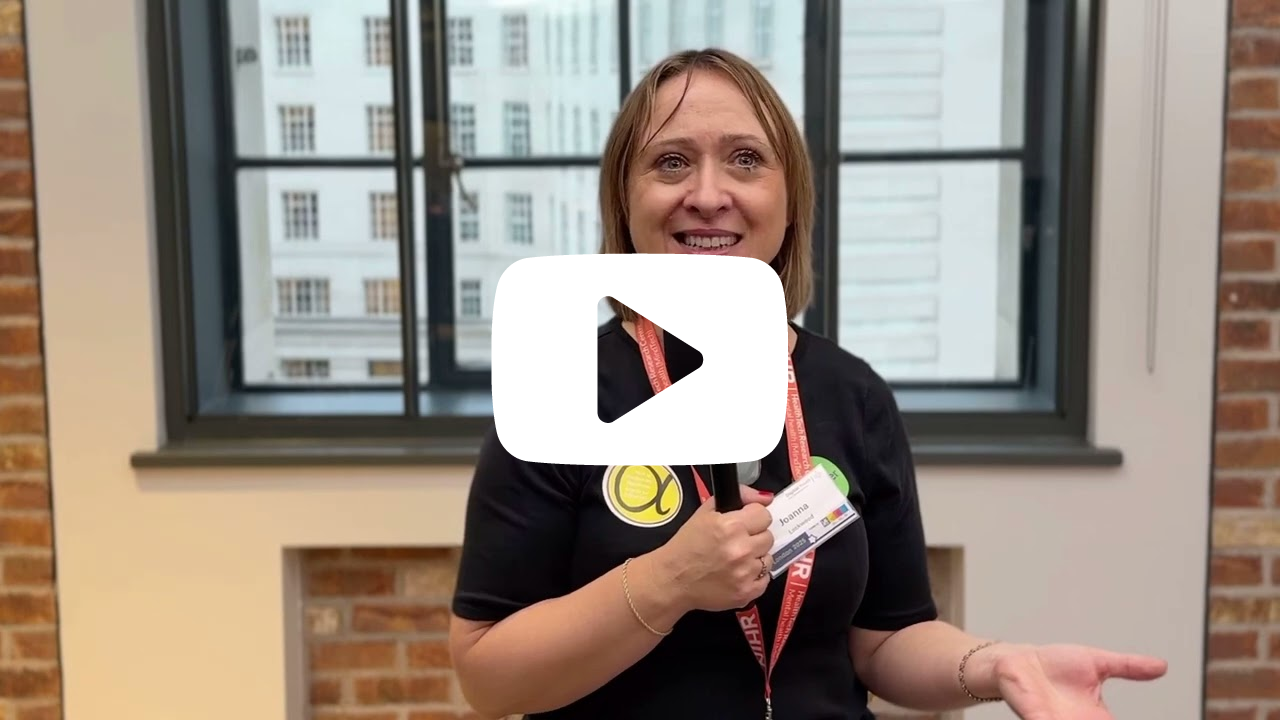
Influential mental health social media expert the Mental Elf (aka Andre Tomlin) has published a series of interviews recorded during last year's Digital Youth x MindTech conference. The videos are now available to watch on the Mental Elf YouTube channel, and include conversations with researchers, young people and project leads. We've included one here featuring MindTech's Dr Joanna Lockwood, which reflects the ethos of co-production running through the Digital Youth programme. View the Digital Youth x MindTech videos on YouTube
|
|
A video created as part of a research project, including Institute colleagues Dr Jo Lockwood and Dr Jen Martin, premiered at the Broadway Cinema in June. The Art of Understanding animation was shown on Monday15 June, and again on Sunday 21 June, to coincide with Refugee Week
The Art of Understanding project brings together University of Nottingham colleagues with young newly arrived refugee and asylum seekers in the city. Through arts-based workshops and using mobile technologies to support understanding, the team creatively explored young people’s journeys to Nottingham and their experience of belonging, connection and wellbeing.
This wonderful film shares the artwork and voices of these young people, beautifully brought to life by Woven Ink
|
|
|
INVOLVEMENT AT THE INSTITUTE
|
|
|
Patient and Public Involvement (PPI) training programme - September cohort
|
|
|
📅 9 September 2026 to 7 October 2026, 1pm to 3pm
📍 Online via MS Teams
🎟️ £250
📥 More information on the IMH website
Applications are now open for our September 2026 Patient and Public Involvement (PPI) training programme. This CPD accredited course is led by Kate Horton, our PPI Lead, and takes place on weekly two-hour sessions, via MS Teams.
This programme is designed for Early Career Researchers, future PPI facilitators and those people expected to deliver PPI within their research. The learning is designed to help you consider and embed meaningful PPI within your systems so you can incorporate living experiences, peer researchers and patient and public contributors to improve the relevance, acceptability and accessibility of your research.
To find out more, visit our website or email Kate Horton
*Cartoon created by Dr Fred Higton, IMH Public Contributor
|
|
|
|
DETERMIND project seeking support
|
|
|
|
The DETERMIND research project is exploring the lived experiences of LGBTQIA+ people affected by dementia, a highly underserved population, with the aim of improving future dementia care pathways to be more inclusive, responsive, and accessible.
Researchers are currently seeking support with recruitment for this study, which involves interviews with LGBTQIA+ people living with dementia anywhere in the UK. Carers are also welcome to take part if the participant wishes.
To learn more or get involved, email Ben Hicks
|
|
|
|
Take part - brain imaging study
|
|
|
Our Forensic Research Nottingham colleagues are inviting participants to take part in a brain imaging study, exploring how the brain processes empathy.
Take part
💠 Are you aged between 18 and 59?
💠 Can you attend the University of Nottingham for two days?
💠 Travel expenses and lunch will be provided.
💠 Participants will be paid minimum wage for their time.
💠 The study will involve screening for mental disorders, including an interview, having an MRI brain scan, having an OPM-MEG brain scan and doing tasks using a touchscreen device.
To find out more visit our website or telephone 0115 7485865
Alternatively, email Asha White or email John Tully
|
|
|
|
Study using AI to detect early-stage post-natal depression is seeking participants
|
|
|
|
Could you take part in a study investigating an AI-powered app monitoring mental wellbeing during pregnancy and the postpartum period?
Participants from 12 weeks pregnant to 12 weeks postpartum will use the TrueBlue app on their mobile devices over 12 weeks. The goal is to assess whether the app is safe, usable, acceptable, and how far predictions from the technology agree with standard clinical measures of depression and anxiety. The technology behind this trial has been developed by the study's partner BlueSkeye AI and was featured in a BBC Panorama episode in August 2023, exploring the positive future uses of Artificial Intelligence.
This study is led by Dr Neil Nixon in the Centre for Mood Disorders, and run in close collaboration with experts in Public Patient Involvement (PPI) and senior specialist clinicians at Nottinghamshire Healthcare NHS Foundation Trust.
For anyone interested in the trial, email the TrueBlue team or call 0115 748 6749. Alternatively view and complete the TrueBlue expression of interest form
|
|
|
📅 9 September 2026 to 7 October 2026, 1pm to 3pm
📍 Online via MS Teams
🎟️ £250
📥 More information on the IMH website
Our spring 2026 Patient and Public Involvement (PPI) training programme is now underway, but the dates for the next programme cohort have been confirmed. This CPD accredited course is led by Kate Horton, our PPI Lead, and takes place on weekly two-hour sessions, via MS Teams.
This programme is designed for Early Career Researchers, future PPI facilitators and those people expected to deliver PPI within their research. The learning is designed to help you consider and embed meaningful PPI within your systems so you can incorporate living experiences, peer researchers and patient and public contributors to improve the relevance, acceptability and accessibility of your research.
To find out more, visit our website or email Kate Horton
|
|
📅 11 July 2026
⏲️ 09:30 to 18:00
📍 School of Computer Science, NG8 1BB
💳 £120
💠 More information and registration
As part of her work in responsible technology in death and dying, Professor Elvira Perez Vallejos invites you to this one-day event, followed by a 2hr group online session.
It has been created for anyone who wishes to gain a deeper understanding of what it means to accompany others at the end of life, and how to do so in a more conscious, humane, and transformative way.
|
|
|
➡️ Save the date!
📅 9 and 10 September 2027
📍 Crowne Plaza, Nottingham
💠 Details coming soon
Building on the success of Refocus on Recovery 2025, dates for Refocus on Recovery 2027 have now been confirmed.
Last year's event aimed to provide inspiration and network space for people interested in recovery research, with an intention to appeal to new audiences. It featured presentations from invited keynote speakers and through selected abstracts, providing a platform for both lived experience perspectives, and empirical research studies.
Check our events page for updates
Read the Refocus on Recovery 2025 report
|
|
📅 6 August 2026, 11am to 1.30pm
📍 African Caribbean Centre, Leicester LE2 0UA
💳 Free - drop in anytime, no need to register
MindTech are hosting a free family fun day to explore mental health research - an event led by Dr Charlotte Hall and Dr Camilla Babbage in collaboration with the Centre for Ethnic Health Research (CEHR).
The event is open to all and is a free family-friendly open day. No need to book, just turn up on the day.
💠Learn about mental health research
💠Meet friendly researchers
💠Get involved in creative activities
💠Try out technologies used to support mental health
💠Share your views and experiences
The event is part of the EXPAND project, which explored the experiences of accessing services and understanding neurodevelopmental disorders for ethnic minorities in England.
|
|
|
We would love to hear from you.
Please visit our website or follow us on our social media pages to
keep up to date with our news and updates. |
The Institute of Mental Health brings together healthcare staff and academics to lead mental health research designed to improve diagnosis, treatment, and care. We are a partnership between two highly respected organisations, Nottinghamshire Healthcare NHS Foundation Trust and the University of Nottingham. |
|
|
|
@institutemh institutemh.org.uk
|
|
|
|
|
|