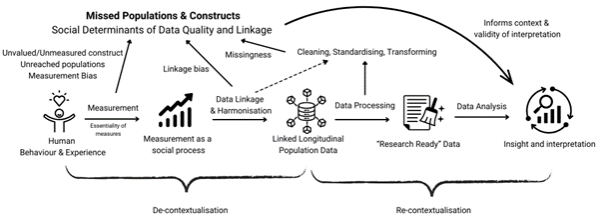
When researchers work with linked data, it can be tempting to think of linkage as a purely technical step: records either match or they do not. However, linkage can also influence who is represented in the data, what information is captured about them, and ultimately how research findings should be interpreted.
In this article, Joseph Lam explores why understanding linkage quality requires looking beyond headline linkage rates. The article discusses linkage bias, how administrative and health data are created and processed, and why researchers need information about who is represented in linked datasets and who may be missing.
Read more about
linkage quality in UK LLC.